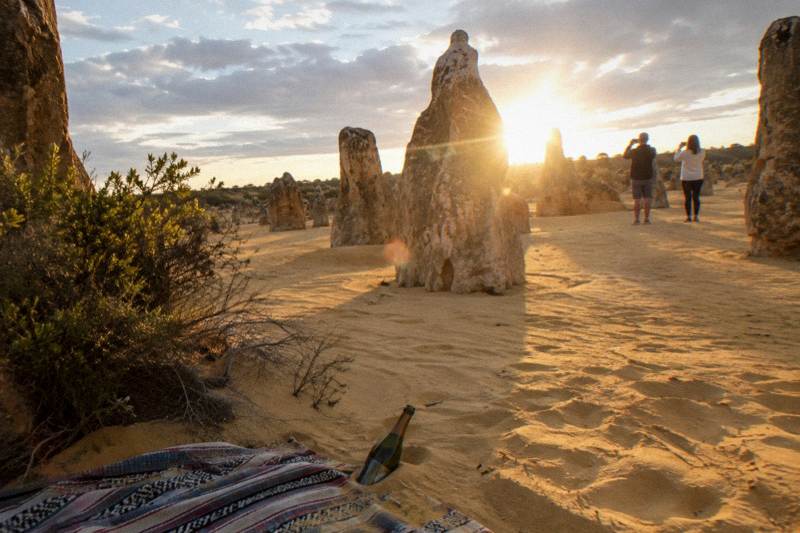
Best Time To Visit The Pinnacles: Weather By Season
The Pinnacles sit about 200 km north of Perth in a hot, dry, winter-wet climate. Bureau of Meteorology averages from Jurien Bay show summer tops above 30 degrees and almost no December rain, while June and July deliver more than 100 mm each. Here is how that shapes a visit, month by month and season by season.
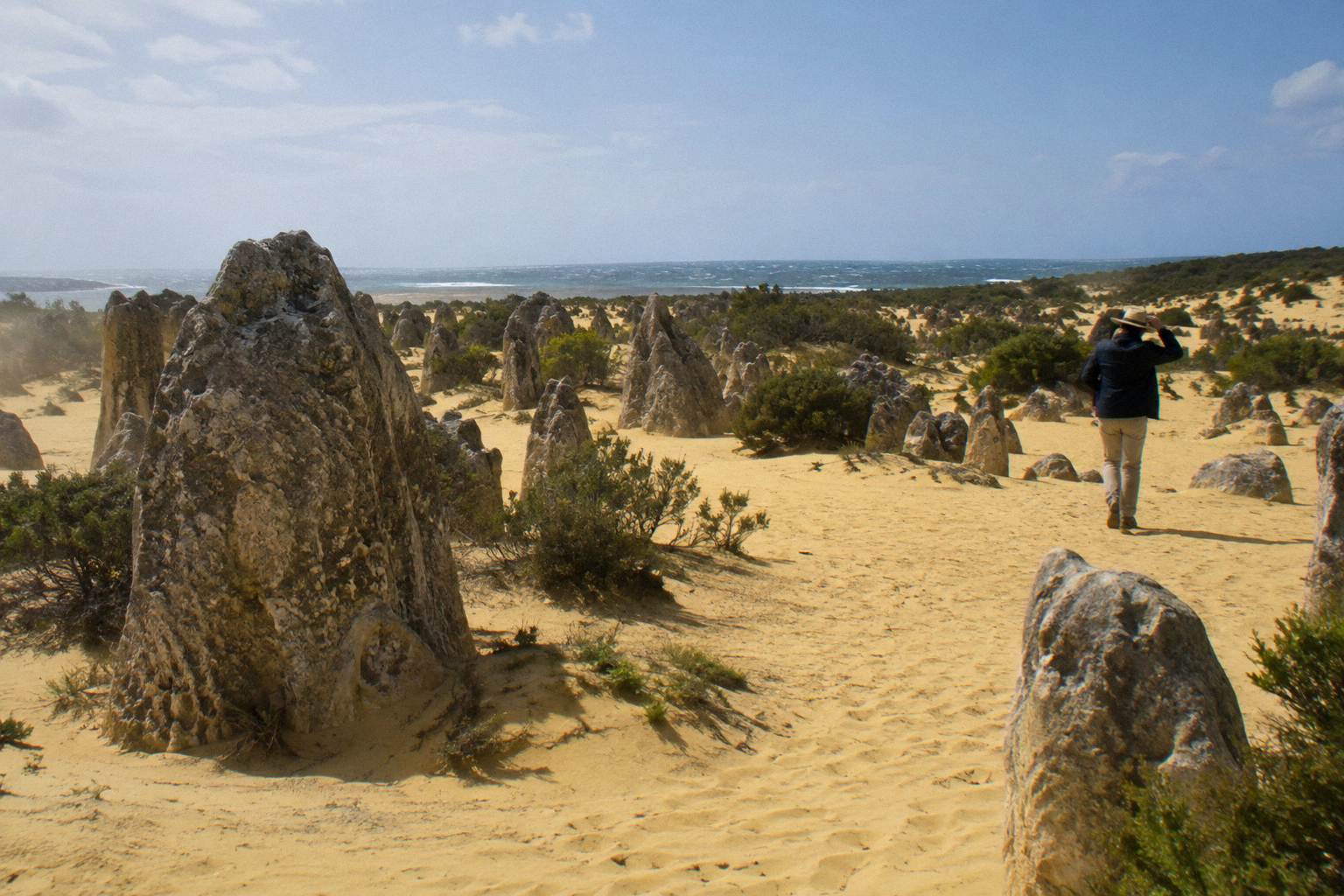
Short answer
The most comfortable months to visit the Pinnacles are spring, from August to October, when Jurien Bay averages sit between 20 and 23 degrees maximum, rainfall falls away, and wildflowers bloom. Winter is coolest but wettest, with 106.6 mm in June and 111.1 mm in July. Summer runs hot and dry with possible extreme fire danger. The park stays open year round.
The Pinnacles Desert lies inside Nambung National Park, roughly 200 km north of Perth, and the trip options that reach it run through every month of the year. Pinnacles Desert Tours, Pinnacles Desert Tours, covers them all, and a good starting point for the day-trip family is the guide to Pinnacles day trips with a lobster lunch or dinner, which spans everything from a six-hour express run to full days with lobster lunches and dune stops. Timing matters for that decision, because the same desert is a very different place in January than in August.
| Fact | Detail |
|---|---|
| Nearest full climate record | Bureau of Meteorology Jurien Bay station, about 200 km north of Perth along the same coast |
| Park status | Nambung National Park is open year round, with all-season interest |
| Summer conditions | December to March is hot and dry, with extreme fire danger possible |
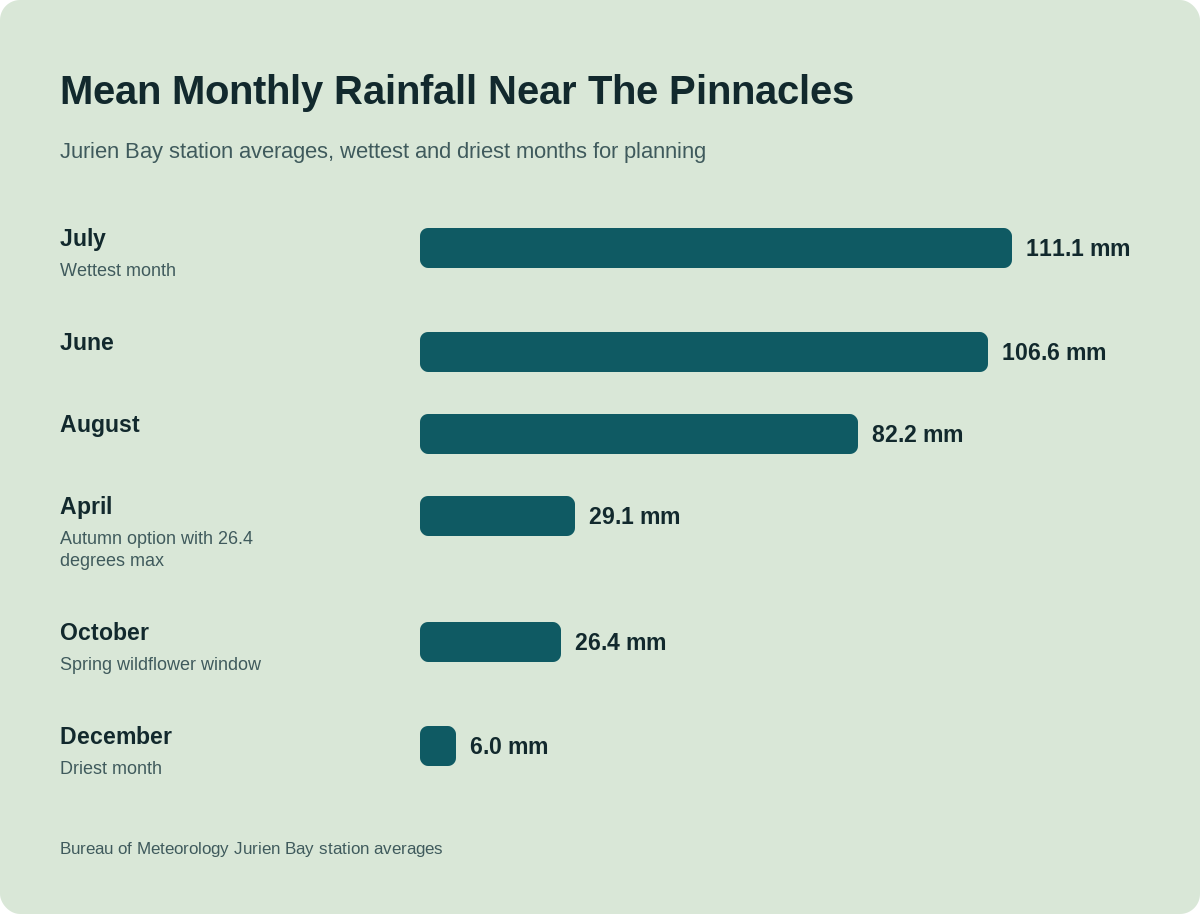
| Wettest months | June at 106.6 mm and July at 111.1 mm mean rainfall |
| Driest month | December at 6.0 mm mean rainfall |
| Wildflower window | August to October per DBCA, July to October peaking August to September per Coral Coast tourism |
| Visitor centre | Pinnacles Desert Discovery, open 9:30 am to 4:30 pm daily, closed Christmas Day |
What Is The Weather Like At The Pinnacles?
The Pinnacles sit in a warm temperate coastal zone where summer means hot, dry days above 30 degrees and winter means mild days near 20 with the bulk of the year's rain. The Bureau of Meteorology's Jurien Bay station, the closest one with a long record, shows January and February averaging 30.1 and 30.8 degrees maximum, while July tops out at just 19.6. Rainfall swings from 6.0 mm in December to 111.1 mm in July.
There is no Bureau of Meteorology station table for Cervantes itself, the nearest town to the park, so the Jurien Bay record is the standard reference for the coast either side of the Pinnacles. That station has been running since 1968 and carries more than fifty years of temperature and rainfall observations, which makes its monthly averages a stable base for planning rather than a snapshot of one unusual year. The figures below are drawn directly from the Bureau of Meteorology Jurien Bay table.
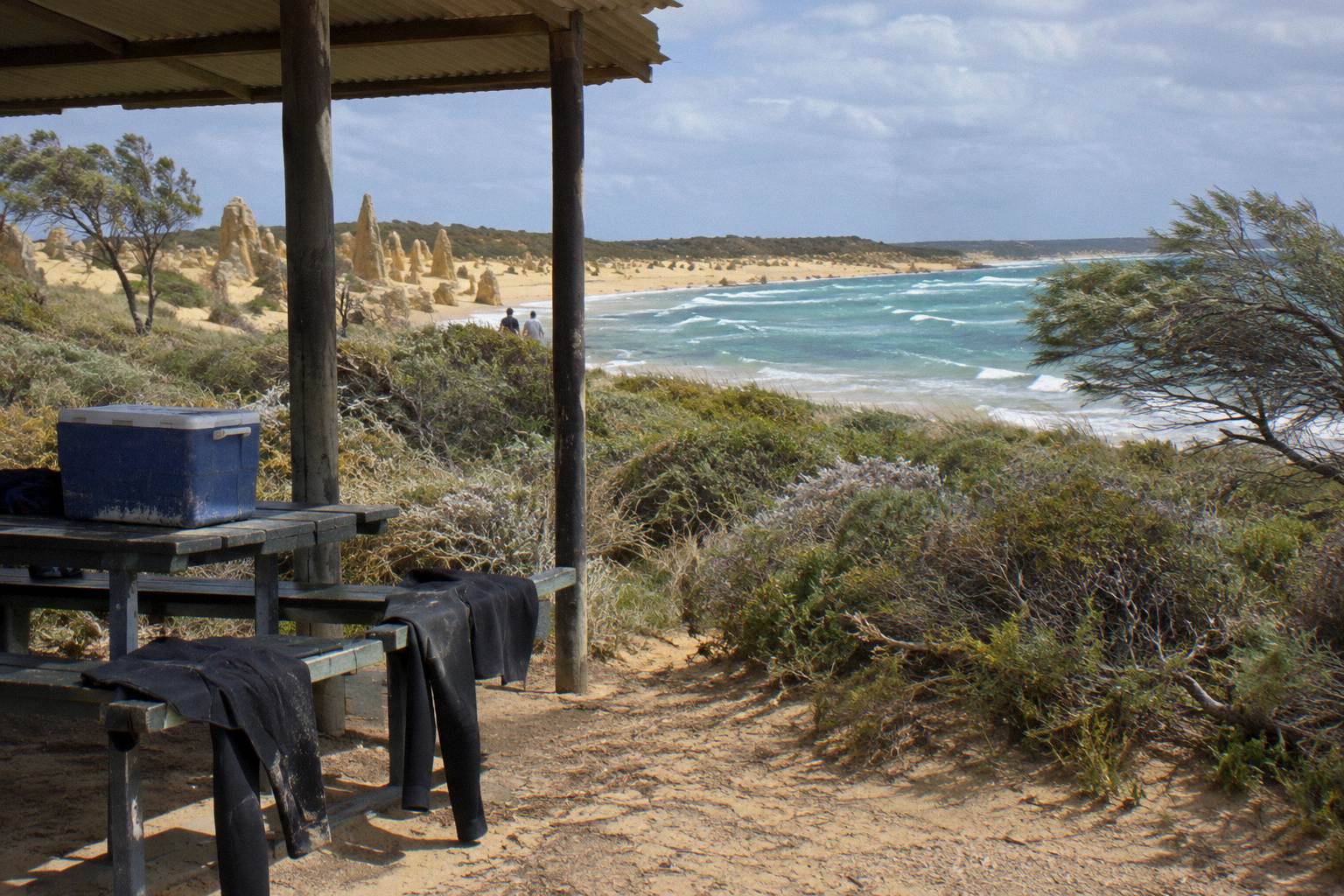
Two practical points follow from the climate. First, the desert has almost no shade: the limestone pillars stand in open yellow sand, and DBCA describes summer as hot and dry with extreme fire danger possible. Second, rain concentrates hard into June and July, so a winter visit trades cooler walking conditions against a real chance of a wet, cloudy day on the coast. Both ends of the year have genuine appeal, but they reward different kinds of trips, and the rest of the article works through which is which.
Monthly Temperatures And Rainfall Near The Pinnacles
Jurien Bay averages put the warmest stretch in February at 30.8 degrees maximum and the coolest in July at 9.5 degrees minimum, with mean monthly rainfall peaking at 111.1 mm in July and bottoming out at 6.0 mm in December. March through May is the transition from heat to rain, and September through November is the reverse. The table gives every month.
| Month | Mean Max (C) | Mean Min (C) | Mean Rain (mm) |
|---|---|---|---|
| January | 30.1 | 17.3 | 7.3 |
| February | 30.8 | 18.0 | 15.2 |
| March | 29.5 | 16.8 | 15.1 |
| April | 26.4 | 14.2 | 29.1 |
| May | 23.4 | 11.7 | 73.3 |
| June | 20.6 | 10.3 | 106.6 |
| July | 19.6 | 9.5 | 111.1 |
| August | 20.1 | 9.5 | 82.2 |
| September | 21.4 | 10.0 | 41.8 |
| October | 23.4 | 11.4 | 26.4 |
| November | 26.0 | 13.8 | 16.9 |
| December | 28.4 | 15.8 | 6.0 |
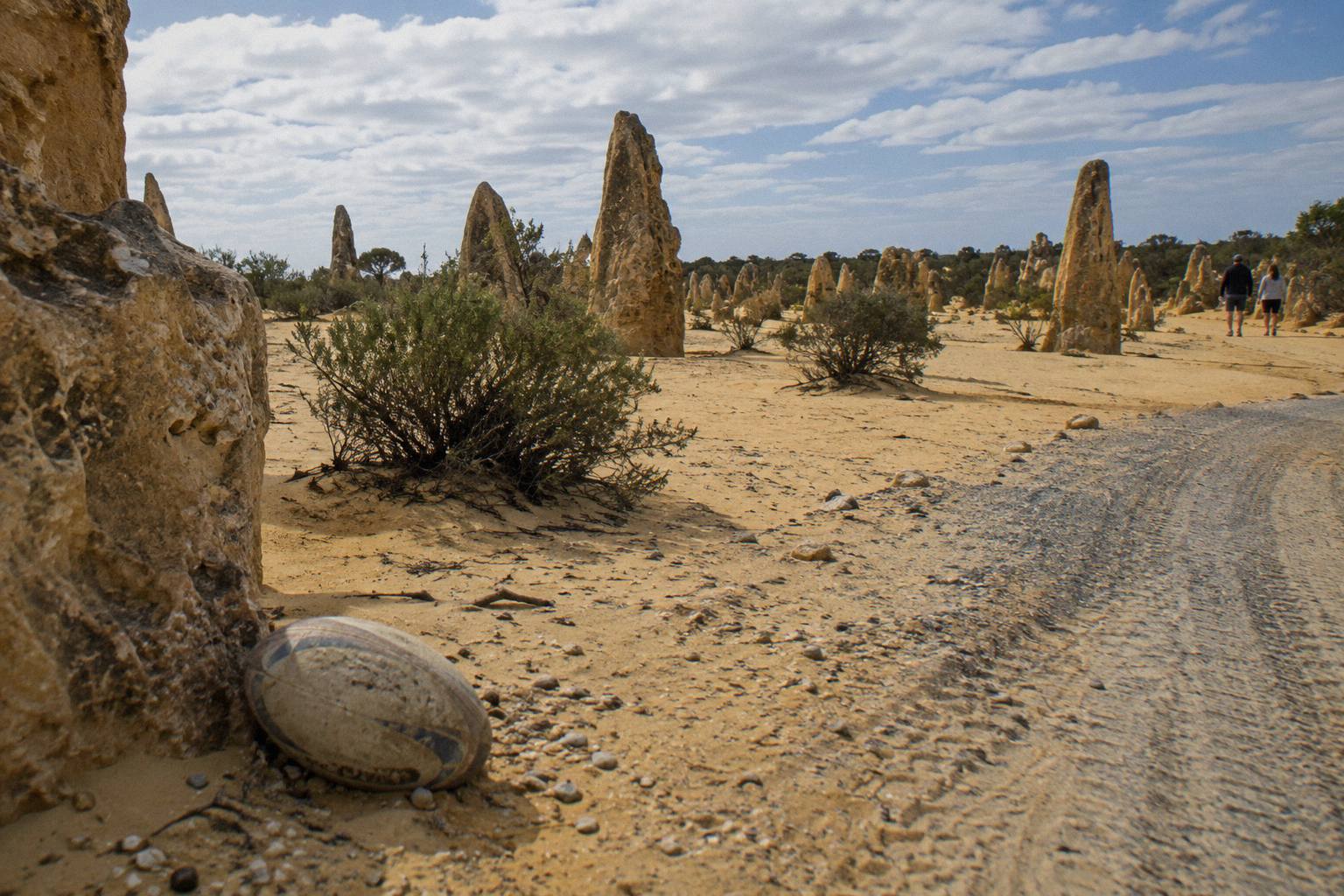
Reading the table as a trip planner, three windows stand out. September and October combine maxima of 21.4 and 23.4 degrees with rainfall collapsing from winter levels to 41.8 and 26.4 mm. April does something similar on the other side of winter, at 26.4 degrees and 29.1 mm. June and July, by contrast, are the months where a full-day itinerary carries the highest chance of disruption from weather, whatever an operator runs.
That monthly rhythm maps neatly onto tour formats. Short, focused departures such as the 6 Hours Pinnacles Express Tour, from AU$190 per person with hotel pickup in Perth city and Fremantle, sit well in the shoulder months when daylight is pleasant and the risk of a washout is low. Longer days and sunset-and-stargazing formats shift the balance toward the cooler half of the year, when early darkness arrives sooner and midday heat is not a factor. Amounts are Australian dollars, and prices vary by date, with the booking calendar showing the price for the date you choose.
A note on what these numbers can and cannot tell you. Averages describe the long middle of the distribution, not any single week: a December cold change or a freakishly dry July both happen. What the record does establish is the shape of the year, and that shape is unusually pronounced here, with roughly eighteen times more mean rain in July than in December. Planning against the averages, while leaving room for the day itself, is the sensible posture.
Which Season Suits A Pinnacles Day Trip Best?
Spring, from August to October, is the strongest all-round season: maxima sit between 20.1 and 23.4 degrees, rainfall drops from 82.2 mm to 26.4 mm across the three months, and wildflowers bloom through the park's vegetation. Autumn, especially April, is the quieter counterpart. Winter suits travellers who prioritise cool walking and low light over dry certainty, and summer rewards early starts and sunset finishes.
| Season | Months | Typical Max (C) | Rain Character | Best Suited To |
|---|---|---|---|---|
| Summer | Dec to Mar | 28.4 to 30.8 | Very low, 6.0 to 15.2 mm | Early and late daylight, sunset and stargazing formats |
| Autumn | Apr to May | 23.4 to 26.4 | Building, 29.1 to 73.3 mm | Comfortable walking, smaller crowds than spring |
| Winter | Jun to Jul | 19.6 to 20.6 | Highest, 106.6 to 111.1 mm | Cool conditions, flexible plans |
| Late winter | Aug | 20.1 | Falling, 82.2 mm | Wildflower season beginning |
| Spring | Sep to Oct | 21.4 to 23.4 | Low, 26.4 to 41.8 mm | Wildflowers, family day trips, photography |
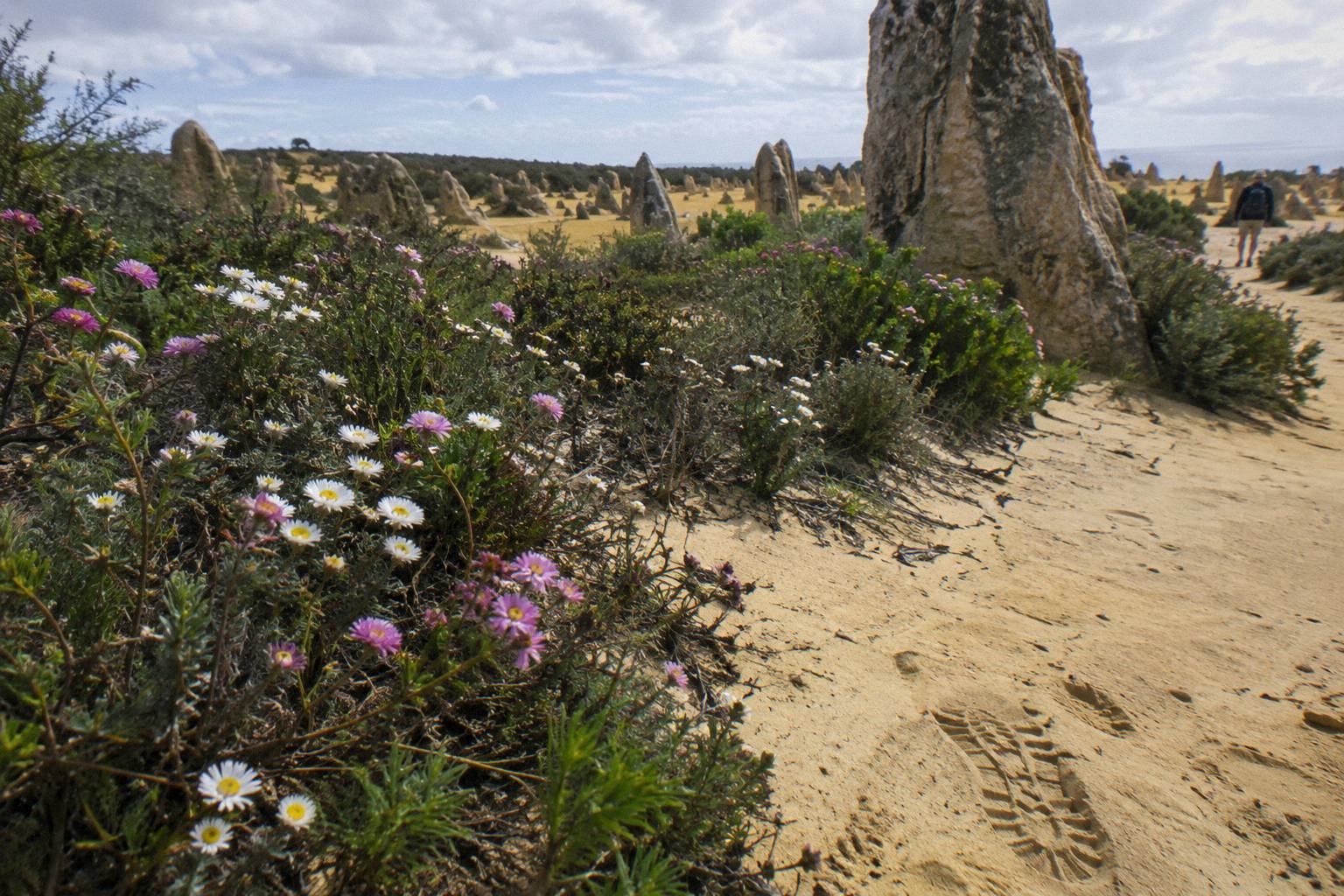
The case for spring is not only the flowers, though DBCA describes the park's vegetation as bursting into flower from August to October, and the Coral Coast wildflower guide extends that window to July through October, peaking August to September. It is also that the desert itself is at its most forgiving: 20 to 23 degrees is comfortable for the 1.5 km Desert View Walk Trail, whose first 300 m is a Class 1 accessible path before 1.2 km of sandy Class 3 trail among the pillars. Flower amounts vary with rainfall, so treat the bloom as a seasonal tendency rather than a guarantee on any date.
Autumn is the season first-time visitors most often underrate. April averages of 26.4 degrees maximum and 29.1 mm of rain are close to ideal for a full day that includes walking, and the Pinnacles Desert, Yanchep, and Swan Valley with Lunch from Perth, from AU$249 per person with hotel pickup and a meal included, is a ten-hour format that sits comfortably in that weather. May turns noticeably wetter at 73.3 mm, so late April edges early May for a long itinerary.
Winter and summer each carry a clear trade-off, and the sections below take them in turn, because DBCA publishes specific advice for the hot months that belongs in its own discussion rather than a footnote.
Summer Heat, Fire Danger And What DBCA Advises
From December to March the Pinnacles are hot and dry, with Jurien Bay maxima of 28.4 to 30.8 degrees and almost no rain, and DBCA warns that extreme fire danger is possible and advises carrying a personal location beacon. The park stays open, the drive loop and walk trail remain usable, and the smart summer pattern is to work around the middle of the day.
The official position comes from DBCA's own park materials: summer in this stretch of the Coral Coast is hot and dry, extreme fire danger is possible, and a personal location beacon is recommended. The DBCA Nambung National Park page carries the current rules and conditions, and it is the right thing to check before any summer trip, since fire danger ratings change day to day in a way monthly averages never capture.
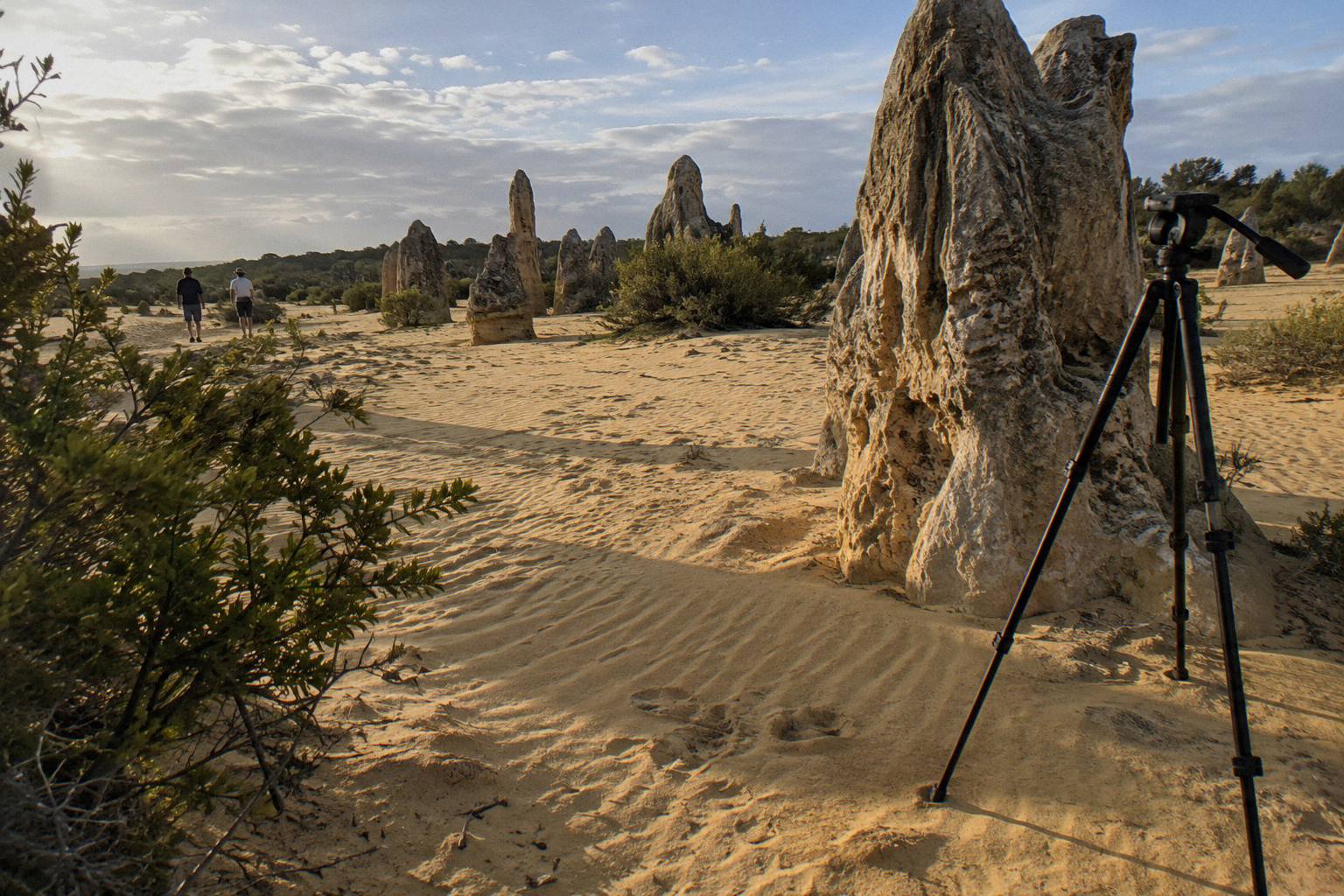
Heat reshapes itinerary design more than it blocks travel. A sunrise or morning arrival beats the 30-degree afternoons for the walk trail, and the Pinnacles Desert Lookout and Drive, about 4.5 km of one-way unsealed track with parking bays, can be driven in the relative cool of early or late daylight. DBCA is explicit that vehicles longer than 7 m, caravans and trailers are not permitted on the loop, though the access roads into the park suit two-wheel drives. Mobile coverage is patchy or absent in parts of the park, and the visitor guide recommends the Emergency+ app, noting that without coverage the app still provides GPS location when a call to 000 is impossible.
Guided formats absorb most of this planning for you, which is part of what you are buying in the hot months. The Pinnacles Desert Lobster Tour from Perth, from AU$174 per person over 9 hours 30 minutes with inner-city pickup and park entry included, times its desert stop against the day's conditions rather than a fixed clock, and its five reviews are. Free cancellation applies up to 24 hours before start, which matters when a summer forecast can turn between booking and departure day. See dates on the booking calendar for the month you have in mind.
Sunset-based departures are the other summer answer, since they put the desert walk into the coolest part of the day. The Pinnacles Desert Sunset Dinner and Stargazing Tour runs 9 hours 30 minutes from designated Perth CBD hotel pickup, from AU$220 per person, and rates 4.8 across 1,155 reviews, a pool large enough to take seriously. Park entry, sandboarding, a meal and stargazing are named as included, and free cancellation runs to 24 hours before start. Cloud and moon, not heat, are the variables a summer stargazing booking really turns on, and the moon-phase question is covered in its own dedicated guide here.
Winter Rain, Cool Days And The Wettest Months
June and July are the wettest months on the Jurien Bay record at 106.6 and 111.1 mm, roughly eighteen times December's mean, yet daytime maxima stay near 20 degrees and the park remains fully open. A winter visit trades the certainty of dry ground for the coolest walking conditions of the year and the earliest nightfall, which long stargazing itineraries use.
Winter rain on this coast arrives as frontal systems off the Indian Ocean rather than monsoon downpours, so a wet week and a brilliant clear one can sit side by side in the same month. The practical consequence for a booked tour is schedule flexibility rather than avoidance: every product in the sunset and stargazing family carries free cancellation up to 24 hours before start, and the same window holds across the shared day-tour formats, so a poor forecast can be walked away from inside a day of departure. Check the live price and the date you want before committing to a specific winter week.
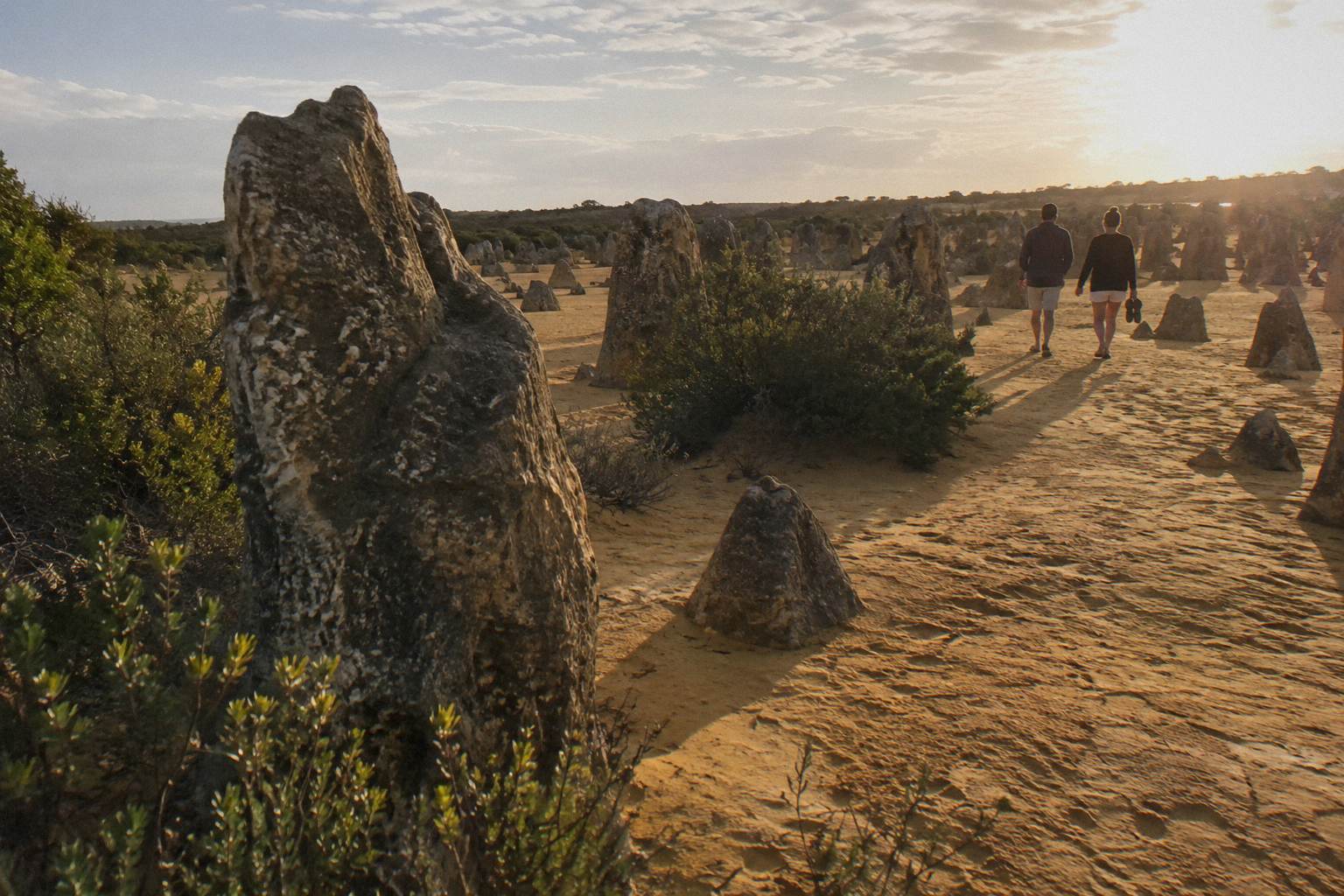
The compensations are real. A 19.6-degree July maximum makes the sandy 1.2 km stretch of the Desert View Walk Trail far easier going than it is in February, and winter's early darkness means stargazing begins at a child-friendly hour, a point worth weighing against the minimum ages on specific products, which range from 2 to 8 across these tours. The Pinnacles Sunset Stargazing Adventure Tour from Perth, from AU$174 per person with park entry, inner-city pickup, a meal and stargazing named as included, has 89 reviews and suits the short-day pattern well.
Winter also feeds the year's payoff. The rain that makes June and July awkward is the rain that drives the spring bloom, since flower amounts vary with rainfall, as both DBCA and Coral Coast tourism note. Travellers with flexibility often split the difference and aim for late August or September, when the soil is still carrying winter moisture, the bloom is underway, and mean rainfall has already fallen to 82.2 and then 41.8 mm. For the full picture on night-sky timing, see the guide to stargazing months and moon phases at the Pinnacles.
Wildflowers, Wildlife Seasons And Spring Timing
DBCA puts the wildflower window at August to October, and Coral Coast tourism extends it to July through October with a peak in August and September, but amounts vary with each year's rainfall and no bloom is promised on any date. Spring maxima of 20.1 to 23.4 degrees make it the most comfortable walking season, and it coincides with the strongest wildlife viewing on the routes to the park.
The wildflower story is genuinely two-voiced, and reporting both is more useful than picking one. DBCA, the park manager, says vegetation bursts into flower from August to October. Coral Coast tourism's seasonal guide gives July to October, peaking August to September, and both sources flag that the display depends on how much rain fell in the preceding months. After an unusually dry winter the bloom thins, and after a wet one it can run stronger and later.
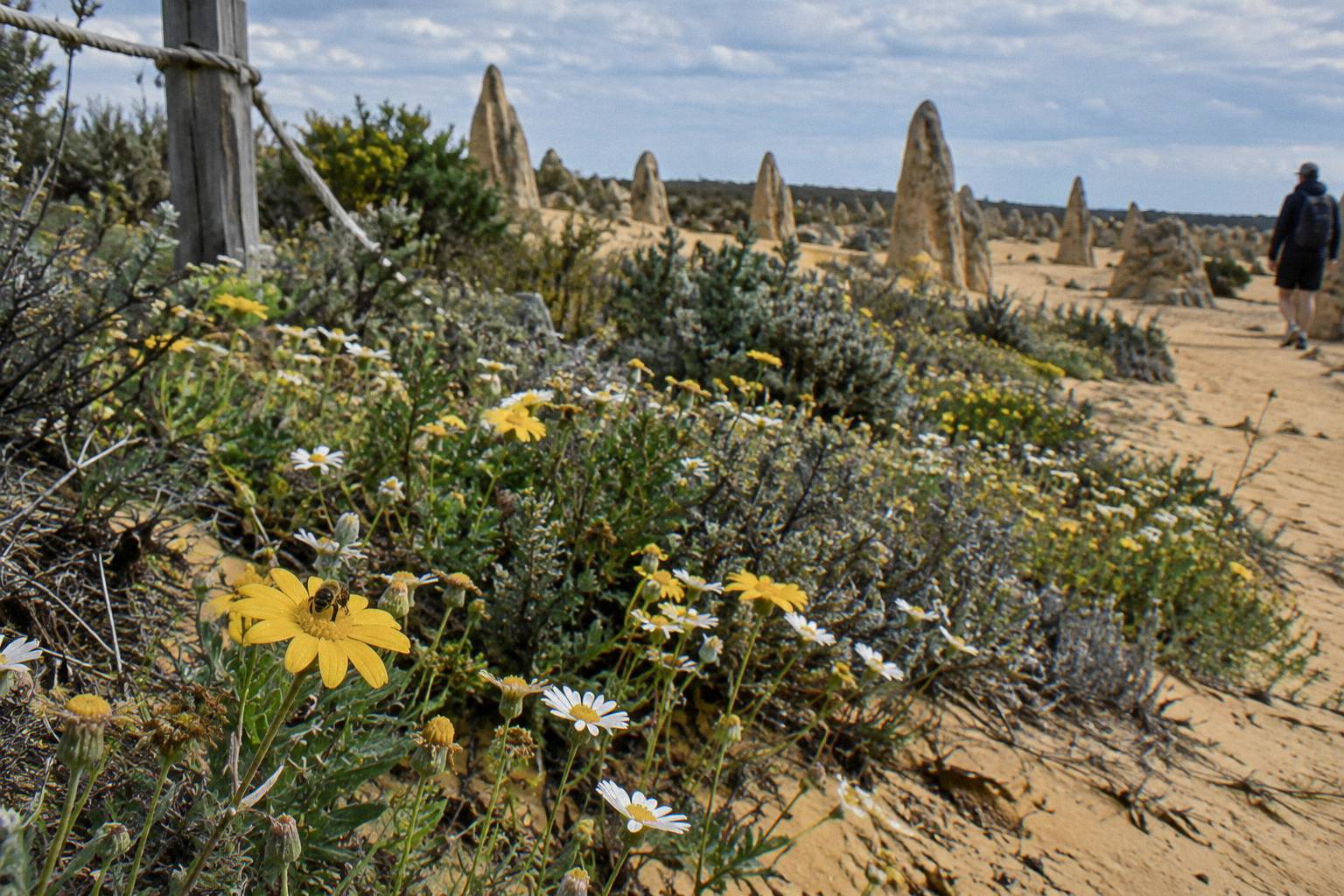
Spring routes to the Pinnacles pass through country that rewards the timing. The koala boardwalk and viewing area at Yanchep National Park, about 50 km north of Perth on the common approach road, sits on several Pinnacles itineraries, and western grey kangaroos graze there through the cooler parts of the day. Further north, the stromatolites of Lake Thetis near Cervantes and the beach at Hangover Bay in the Jurien Bay Marine Park add stops that work best in exactly the weather spring delivers. Whether koalas appear on any given day is up to the animals, and no tour can promise it.
For a spring booking, the lobster-linked formats are the natural fit, since a coastal lunch stop belongs to a mild day. The Pinnacles Lobster Tour from Perth is the pick Pinnacles Desert Tours features for seasonal travelling: park entry and inner-city pickup are named as included, a meal is not, and it runs 9 hours 30 minutes. Its five reviews are, so judge it on its format and price rather than a rating. Full details sit on the Pinnacles Lobster Tour page.
How Weather Should Shape Your Tour Format
Hot months push value toward sunset-and-stargazing departures that use early darkness and skip the midday heat, wet months reward short formats and flexible cancellation, and the long cool-season expeditions fit autumn and spring best. Duration, minimum age and cancellation terms vary product by product, so match the format to the season before matching it to the price.
The mechanics are straightforward once the climate is in view. Summer's 30-degree afternoons and near-zero rainfall make a 6 Hours Pinnacles Express Tour, from AU$190 per person with park entry and hotel pickup in Perth city and Fremantle, an efficient choice: the desert core is seen, the day is not stretched through the heat. Winter's short days and rain risk, by contrast, argue for either a compact departure you can rebook cheaply, or a full stargazing evening where the early night is an asset rather than a limitation.
Multi-day expeditions that pass through the Pinnacles as one leg of a longer route, such as the 7-Day Exmouth Explorer via Pinnacles, Monkey Mia and Ningaloo Reef, from AU$1,995 per person and rated 4.9 across 346 reviews, carry a different weather calculus entirely, since they cross several climate zones and their cancellation window runs to six days before start rather than 24 hours. Those belong to the autumn and spring shoulder more than to midwinter fronts or the height of summer fire season. The overview of multi-day trips via the Pinnacles breaks the options down.
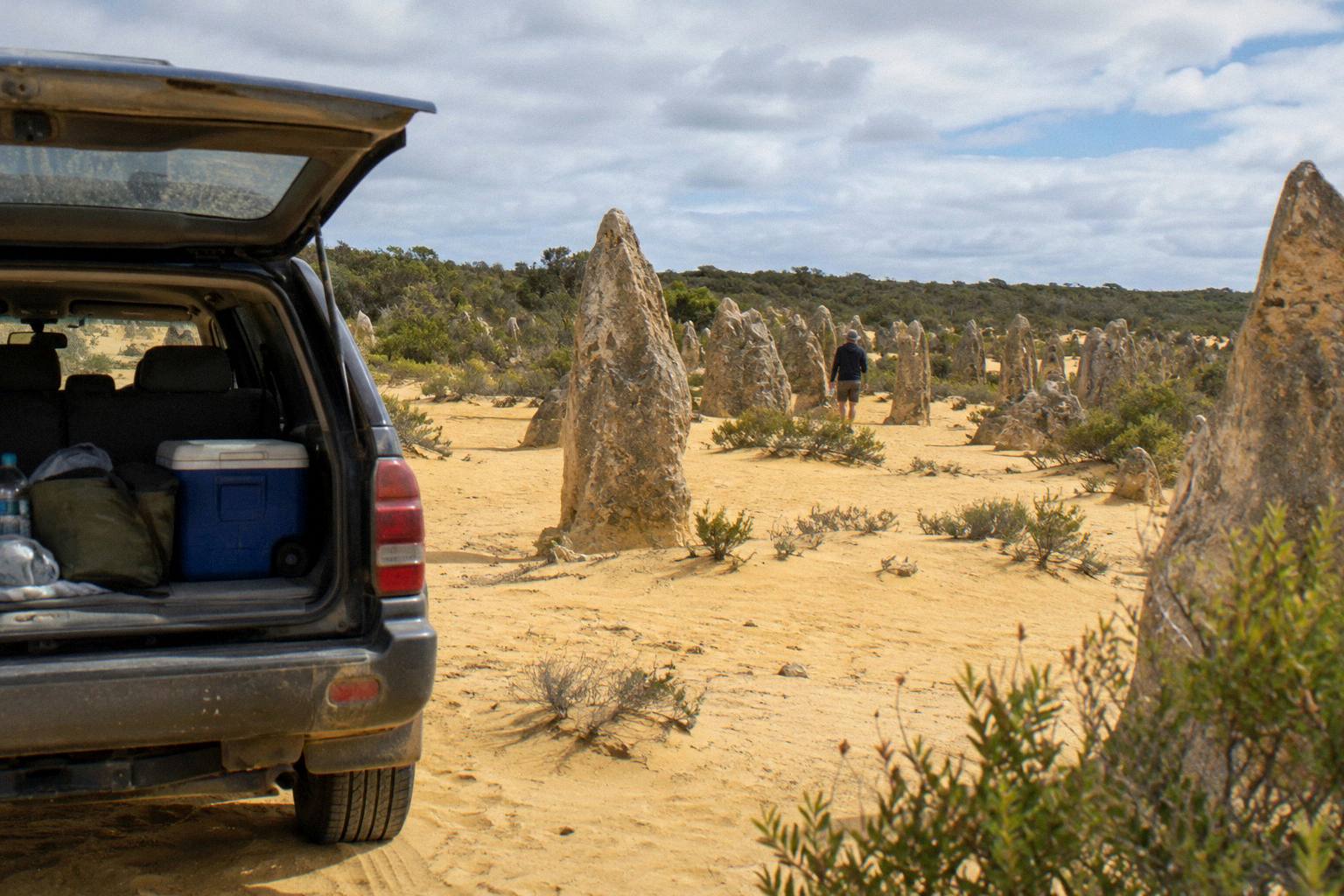
Whatever the season, one rule from DBCA's Nambung National Park guidance applies every day of the year: never climb on the pinnacles. The pillars are fragile limestone, some capped with harder calcrete that weathers into mushroom shapes, and damage from visitors is permanent. DBCA also recognises and acknowledges Yued people as the Traditional Owners of Nambung National Park.
What Trips People Up Before You Book
The four recurring timing mistakes are booking midwinter without a weather escape plan, assuming a summer sunset tour guarantees stars, treating the wildflower window as a promise, and underestimating how much a 30-degree afternoon changes the walk trail. Each has a simple fix, and none of them require abandoning the month you wanted.
Midwinter bookings fail when the cancellation window is missed. Every shared day tour here allows free cancellation up to 24 hours before start, and the multi-day expeditions run to six days, so the discipline is watching the forecast inside that window rather than hoping a booked day clears. A wet July front can sit on this coast for two or three days, and a traveller holding a non-negotiable date has no move left.
Summer stargazing bookings fail on the sky, not the heat. Cloud cover and a bright moon decide what an evening among the pillars delivers, and no operator controls either, so a summer booking is a bet on statistics plus a cancellation option, not a guarantee of a Milky Way arc. Book the date, keep the 24-hour flexibility, and treat anything in the sky as a bonus. The dedicated Pinnacles at night guide explains what the dark sky actually offers and when.
Wildflower expectations fail when a whole trip is staked on the peak. Both official and tourism sources tie the bloom to rainfall, and a dry winter thins it. Anchor a spring trip to the comfortable temperatures and the coastal stops, let flowers be the highlight they often are rather than the sole purpose, and the date carries far less risk. Finally, summer walkers who plan the 1.2 km sandy stretch of the Desert View Walk Trail for midday meet exactly the conditions DBCA's heat and fire warnings describe; shifting that walk to the first or last two hours of daylight fixes it at no cost, and wearing the right gear for the season, covered in what to wear and bring for a Pinnacles sunset, finishes the job.
Common Questions About Timing A Pinnacles Visit
What Is The Best Month To Visit The Pinnacles?
September and October combine Jurien Bay means of 21.4 and 23.4 degrees maximum with falling rainfall of 41.8 and 26.4 mm, and they sit inside DBCA's August to October wildflower window. September is arguably the single best month, catching the bloom while the ground is still cool. The park is open year round, so no month is closed, only better or worse suited.
Does It Rain A Lot At The Pinnacles?
Rain is highly seasonal. June and July average 106.6 and 111.1 mm at the Jurien Bay station, while December averages 6.0 mm and the summer months as a group stay below 16 mm. Most of the year's rain falls between May and August, concentrated in passing frontal systems rather than steady all-day drizzle.
How Hot Does The Pinnacles Desert Get In Summer?
Jurien Bay averages 30.1 degrees maximum in January and 30.8 in February, with means rather than extremes, so individual days run hotter. DBCA describes summer as hot and dry with extreme fire danger possible and advises carrying a personal location beacon. Early-morning and sunset visits are the standard way around the midday heat.
When Can I See Wildflowers At The Pinnacles?
DBCA puts the flowering season at August to October, and Coral Coast tourism gives July to October with a peak in August to September. Both sources state that amounts vary with rainfall, so the bloom differs year to year and cannot be promised for a specific date. Late August into September is the highest-probability window.
Is Winter Too Cold For A Pinnacles Sunset Tour?
Winter maxima sit near 20 degrees with minima around 9.5 to 10.3 degrees, so evenings are cool rather than bitter, and layers handle it. The bigger winter variable is rain: June and July are the two wettest months. Free cancellation up to 24 hours before start applies across the shared sunset formats, which covers a forecast turn.
Do Tours To The Pinnacles Run All Year?
Nambung National Park is open year round, and the day-tour formats here operate as shared departures across the seasons, with start times set on the booking calendar. Cancellation terms differ by product: shared day tours allow free cancellation up to 24 hours before start, while the multi-day expeditions run to six days. Check the calendar for the specific month before locking a date.