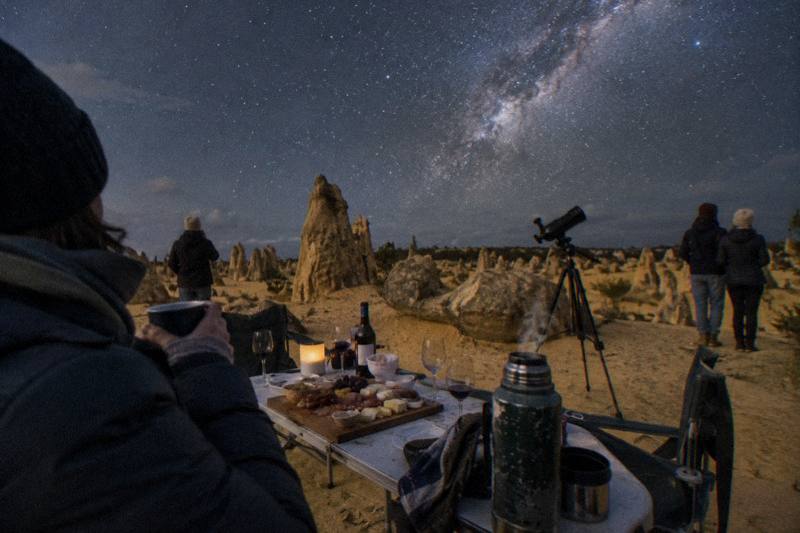
Pinnacles Stargazing: Best Months And Moon Phases
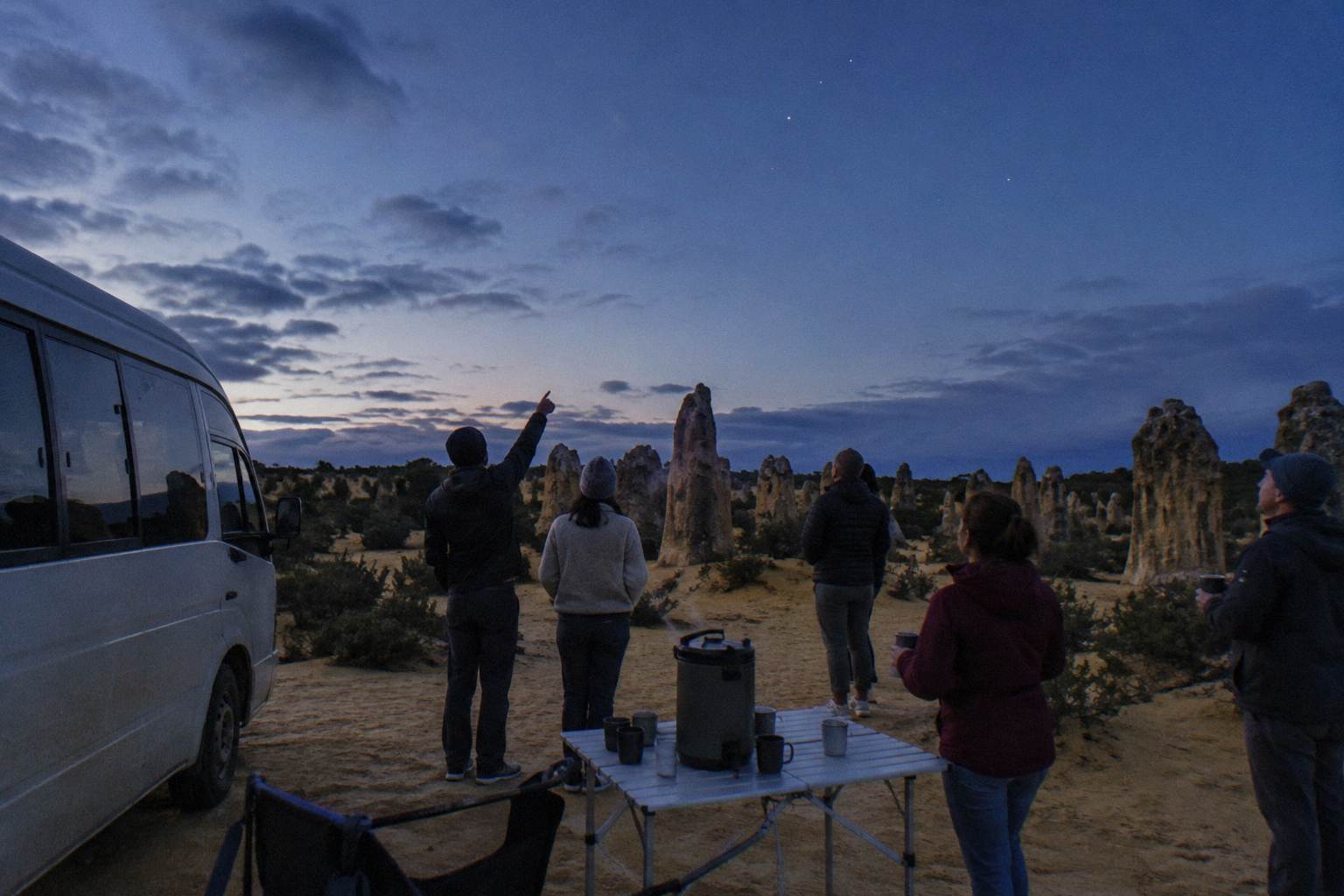
The Pinnacles sit far enough from Perth's glow that the sky, not the landscape, becomes the reason to stay after dark. Two things decide how good that sky is: the month you visit and the phase of the moon on the night you go.
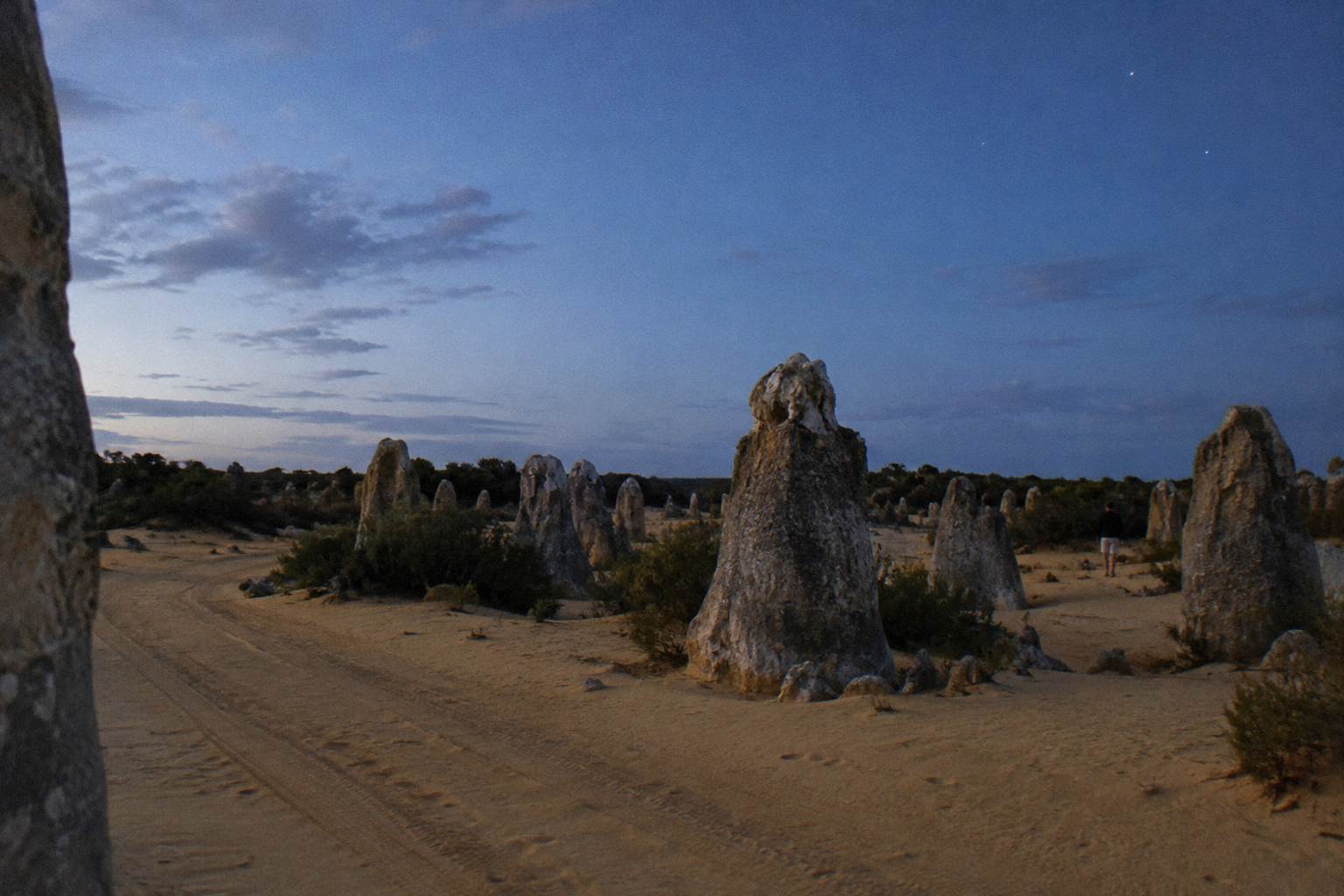
Short answer
Aim for the cooler months, roughly March to October, when skies over the Jurien Bay coast are clearest, and pick a night within about a week of a new moon. June and July are the wettest months on record, so shoulder months such as April, May, September and October often balance clear skies against comfortable evening temperatures.
The Pinnacles sit under some of the darkest sky within reach of Perth, and most visitors who stay for the stars arrive on the Sunset Stargazing Adventure departure. Timing is the part of that decision people most often get wrong: the month controls cloud and rain, and the moon phase controls how much of the faint sky survives. Both are predictable, and both can be planned around with a calendar and a bit of arithmetic.
| Fact | Detail |
|---|---|
| Clearest sky period | Cooler months, about March to October, per West Australian astronomy club guides |
| Wettest months at Jurien Bay | June, 106.6 mm average, and July, 111.1 mm average |
| Driest months at Jurien Bay | December, 6.0 mm, and January, 7.3 mm |
| Best moon phase for stargazing | New moon, or the nights either side of it |
| Worst moon phase for stargazing | Full moon, and the two to three nights around it |
| Nearest climate record | Bureau of Meteorology Jurien Bay station, 1968 to present |
| Featured tour | Pinnacles Sunset Stargazing Adventure, from AU$174 per person, 4.7 from 89 reviews |
Amounts and tour prices in Australian dollars unless noted otherwise.
What Months Give The Best Stargazing At The Pinnacles?
The cooler months, roughly March to October, are the strongest period for stargazing at the Pinnacles. West Australian astronomy club guides describe this stretch as the clearest part of the year for the state's dark inland and coastal sites, and the rainfall record for nearby Jurien Bay backs that up: the wettest months are June and July, while the April to May and September to October shoulders combine modest rainfall with mild overnight minimums between about 10 and 14 degrees.
The nearest Bureau of Meteorology station with a long record is Jurien Bay, station 009131, which has been measuring the coast since 1968. Its averages describe the same strip of coast the Pinnacles sit on, and they are the most reliable way to compare months. The table below is the monthly picture: mean daily maximum, mean daily minimum, and mean rainfall in millimetres. Read the rainfall column as a cloud proxy. A month with high average rain carries more cloudy nights than a month with very little, even though any single night can defy the average.
| Month | Mean Max (C) | Mean Min (C) | Mean Rain (mm) |
|---|---|---|---|
| January | 30.1 | 17.3 | 7.3 |
| February | 30.8 | 18.0 | 15.2 |
| March | 29.5 | 16.8 | 15.1 |
| April | 26.4 | 14.2 | 29.1 |
| May | 23.4 | 11.7 | 73.3 |
| June | 20.6 | 10.3 | 106.6 |
| July | 19.6 | 9.5 | 111.1 |
| August | 20.1 | 9.5 | 82.2 |
| September | 21.4 | 10.0 | 41.8 |
| October | 23.4 | 11.4 | 26.4 |
| November | 26.0 | 13.8 | 16.9 |
| December | 28.4 | 15.8 | 6.0 |
The numbers come from the Bureau of Meteorology Jurien Bay table, the official climate record for this coast. Two patterns stand out. First, December through February is genuinely dry, 6.0 to 15.2 mm a month, but summer nights are warm and DBCA flags the December to March period as hot and dry with possible extreme fire danger, which makes long evening stops less comfortable. Second, the June to July peak in rainfall coincides with the coldest minimums, around 10 degrees, so a winter stargazing night that does stay clear is also a cold one. The shoulder months sit between those extremes, which is why guides that discuss the state's dark sites point to the cooler months overall rather than deep winter specifically.
None of this is a promise about any night. Averages describe decades, and a July night can be perfectly clear while an October night clouds over. The monthly table narrows the odds, it does not fix the outcome, and the operators who run Pinnacles stargazing trips keep running year round because every month has clear nights. The question a planner is really answering is which month stacks the odds in favour, and on this coast that means the cooler half of the year, avoiding the two wettest months if the trip allows it.
How Much Does The Moon Phase Matter For Stargazing?
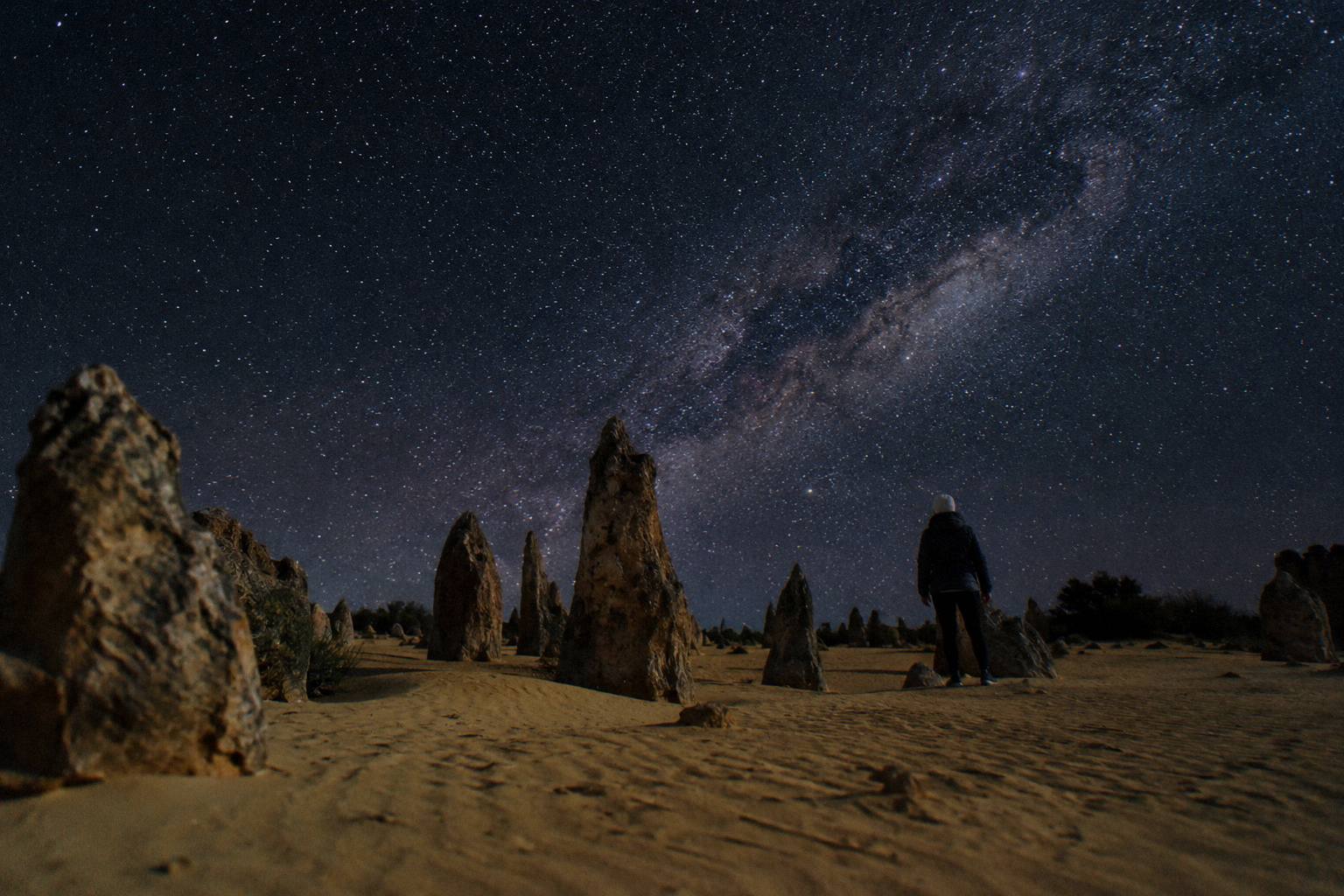
The moon matters as much as the weather, and on a cloud-free night it matters more. A full moon is bright enough to wash out the faint stars, the Milky Way's glow and most detail above the Pinnacles, leaving only the brightest objects. Around a new moon the sky returns to its darkest state. The difference is not subtle: it separates a sky of a few hundred visible stars from a sky of thousands.
The mechanics are simple. The moon reflects sunlight, and as it moves through its roughly 29.5 day cycle it rises about 50 minutes later each evening. In the nights after a full moon it rises late, so the first hours after dark get progressively darker. In the nights before a full moon it rises around sunset and stays up all night, which is the worst combination for stargazing. A new moon, when the moon sits between the earth and the sun, means no moonlight at all during the night hours.
| Moon Phase | Night Sky Effect | Best For |
|---|---|---|
| New moon | Darkest sky of the cycle, faint stars and the Milky Way's band at their most visible | Dedicated stargazing nights |
| Waxing crescent | A thin moon sets early, dark skies for most of the night | Good stargazing with a photogenic early moon |
| First quarter | Moon sets around midnight, dark second half of the night | Late evening stargazing |
| Waxing gibbous | Bright moon up for most of the night, faint detail fading | Moon and planet viewing |
| Full moon | Bright sky all night, faint stars washed out | Landscape photography, not deep stargazing |
| Waning gibbous | Moon rises late, dark first half of the night | Early evening stargazing |
| Last quarter | Moon rises around midnight, dark evening hours | Sunset to midnight trips |
| Waning crescent | Thin moon rises just before dawn, dark evening | Very good stargazing nights |
A plain way to use this: find the new moon date for your travel month, and treat the nights from about three days before to about four days after it as the prime window. The nights either side of a new moon also give the moon photography crowd something to work with, which is why a deeper piece on photographing the Pinnacles and its light treats moon phase as a planning input alongside the month. If your dates are locked and they fall near a full moon, all is not lost: bright star clusters, planets and the moonlit landscape itself are still worth seeing, but adjust expectations about the faint sky.
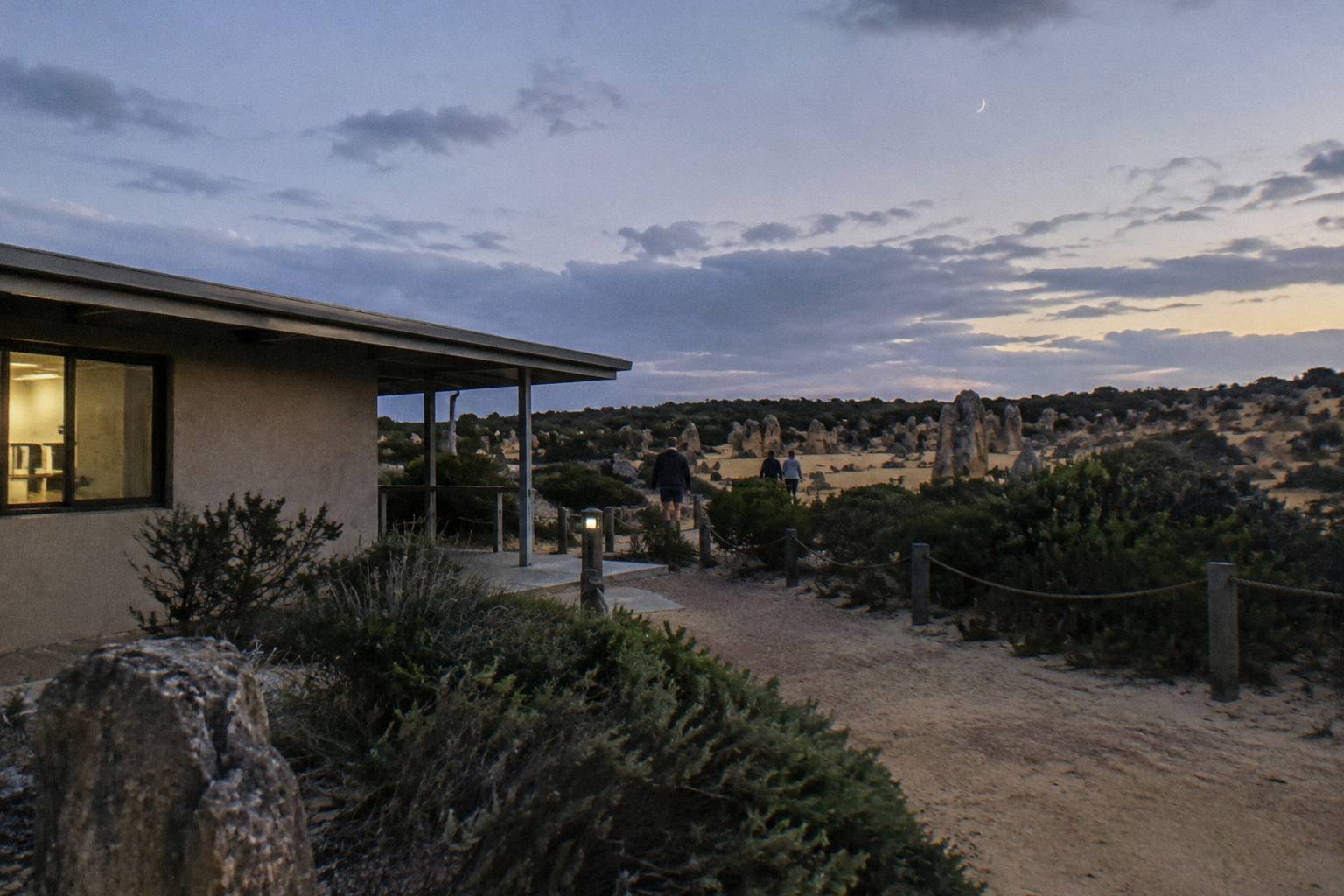
Three Pinnacles tours anchor the stargazing category, and each fits a slightly different timing plan.
The Sunset Stargazing Adventure from Wildlife Tours Australia is the entry price at from AU$174 per person, rated 4.7 from 89 reviews, with park entry and stargazing named as included. The Lumineer Sunset Dinner Stargazing tour is the longest established, 4.8 from 1,155 reviews, from AU$220 per person. Autopia's small group version, 4.6 from 473 reviews, from AU$199 per person, caps the group size. All three pick up in Perth, so the date you choose on the calendar is the only timing decision left.
How Do You Pick A Date Around A New Moon?
Work backwards from the new moon, not forwards from your weekend. New moon dates are published years ahead, so once you know your travel month you can find the exact dark sky window and then check which tours run on those nights. Book the moon phase first and the tour second, because seats on a prime night disappear earlier, and free cancellation up to 24 hours before start lets you adjust if a better window opens.
The practical sequence takes about ten minutes. Find the new moon date for your month. Mark the window from roughly three nights before to four nights after. Cross reference that window against the departure calendar of the tour you want, remembering that start times are chosen on the booking calendar rather than published in advance. Check the long range outlook a few days out, and if cloud is forecast, a 24 hour free cancellation policy on most shared Pinnacles tours means you can rebook a neighbouring night without losing the fare.
A worked example makes the logic concrete. Suppose you have a week in September. September's average rainfall at Jurien Bay is 41.8 mm, mid range and falling, and evening minimums sit near 10 degrees, so a jacket handles it. If the new moon falls midweek, the weekend before sits in a waning crescent, dark in the evening, and the weekend after sits in a waxing crescent, with a thin early moon that sets early. Both weekends work; the exact middle of the week works best. That is the whole method: month first, moon second, tour availability third.
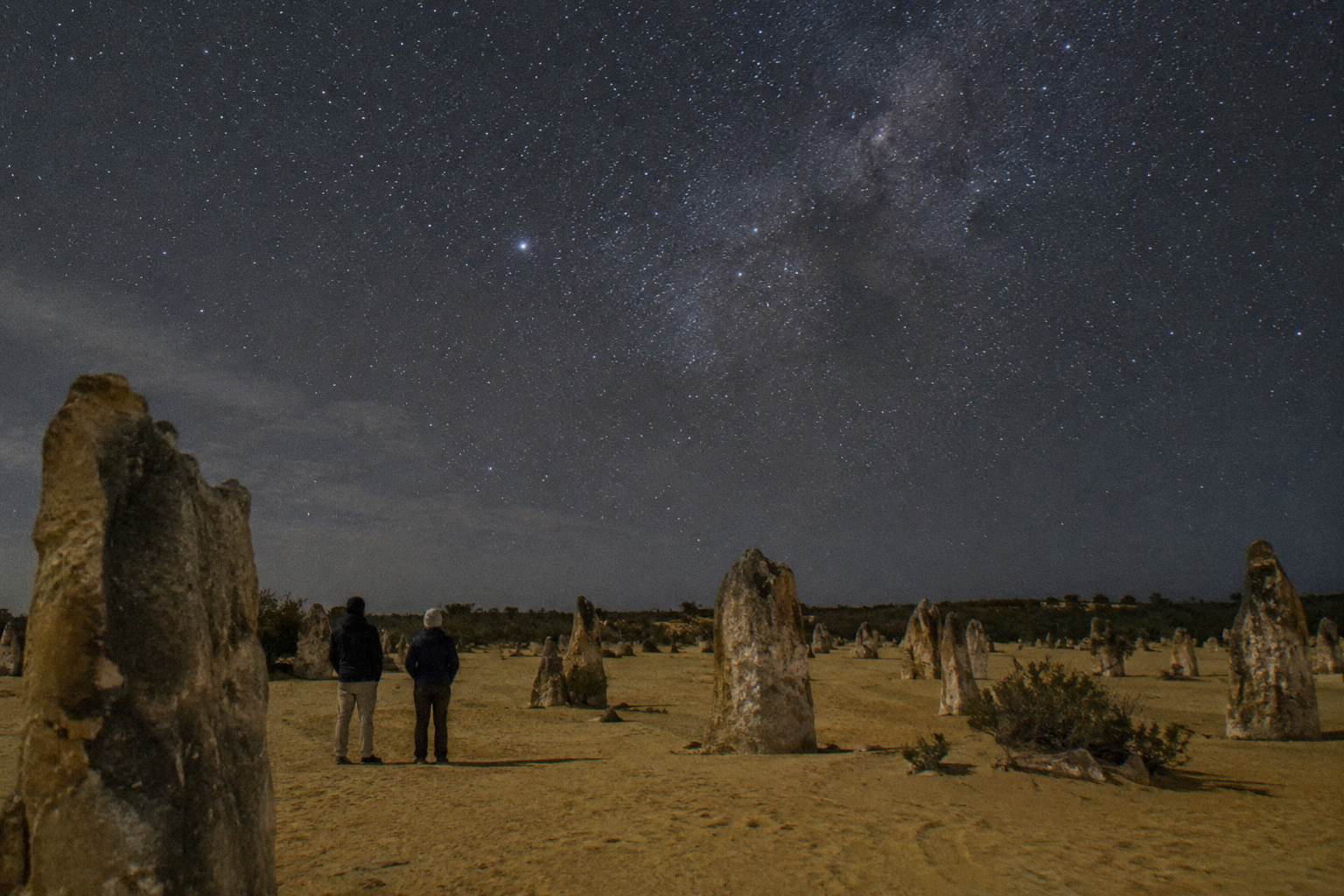
There is a sibling decision worth naming here: whether the after dark experience is the point, or whether the sunset approach matters just as much. The guide on whether a sunset tour beats a daytime visit walks through that trade off. For pure stargazing purposes, the answer leans sunset and stay, because the same drive out becomes the dark sky experience without a second trip, and tour operators plan the dinner stop so the group is back among the pillars when the sky is properly dark.
Cloud, Rain And The Numbers That Matter
Rainfall averages are the closest thing to a cloud forecast you can book against. At Jurien Bay the wettest months are June at 106.6 mm and July at 111.1 mm, roughly double the September figure and about fifteen times the December figure of 6.0 mm. That does not make winter a bad time, it makes winter a time to hold dates loosely and lean on the 24 hour free cancellation the shared stargazing tours carry.
The monthly rainfall gradient along this coast has a shape worth understanding. From December through March the averages sit between 6.0 and 15.2 mm, then they climb steeply: 29.1 mm in April, 73.3 mm in May, and the June to July peak. From August the numbers fall again, 82.2 mm, then 41.8, then 26.4 in October. That shape means the risk of a washed out night roughly doubles between April and May and halves again between September and October. For a once only trip, the September to October shoulder offers the best combination of falling rain, mild 10 to 11 degree minimums, and the added draw of wildflowers: DBCA says the park's vegetation bursts into flower from August to October, and Coral Coast tourism's wildflower season guide extends that to July to October, peaking August to September.
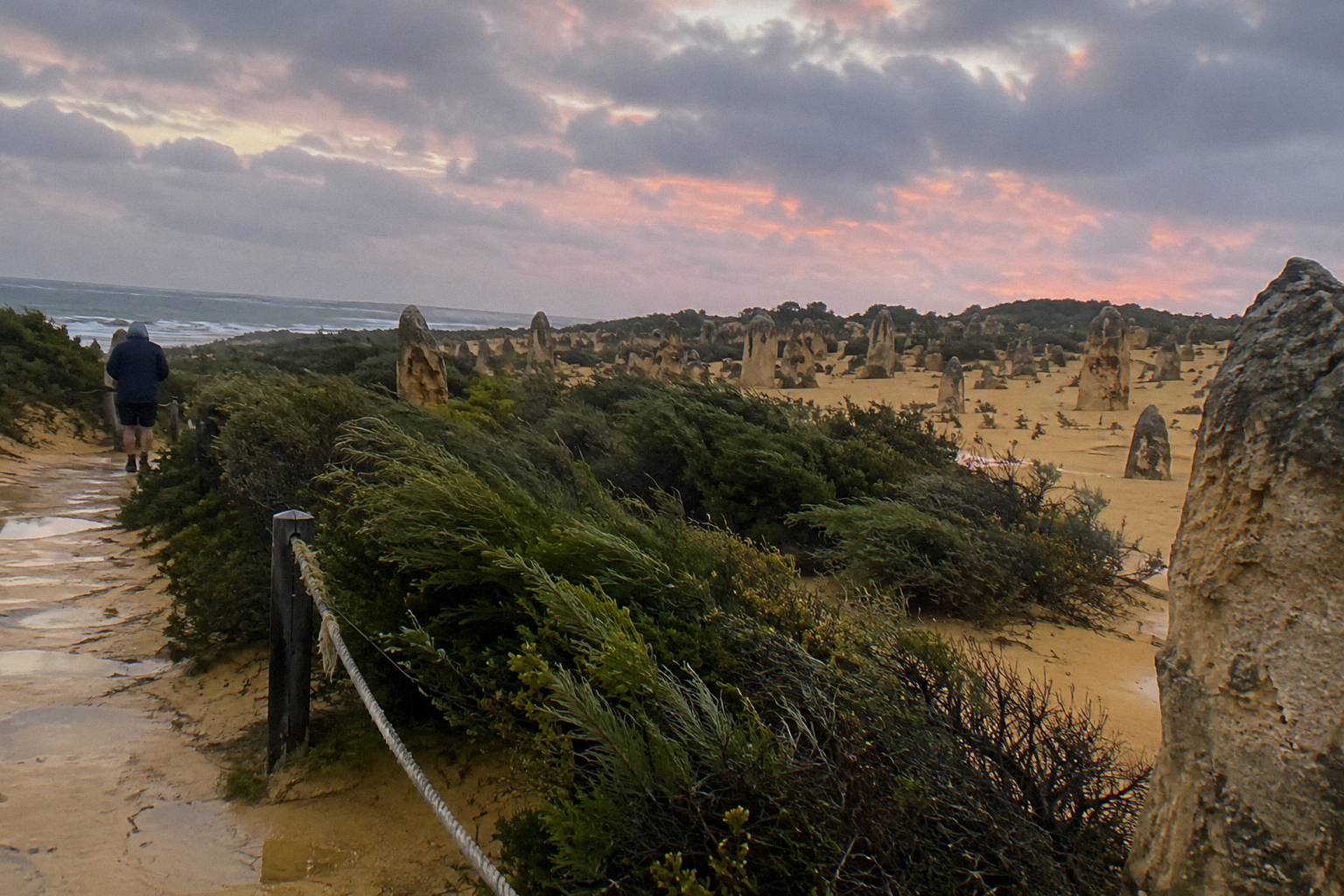
One more climate detail helps set expectations for winter planning. Cloud is not the only nighttime hazard in the wet months; rain itself, and the wind that often travels with cold fronts, can end an evening outdoors early. DBCA's own guidance for the summer end of the year notes hot, dry conditions with possible extreme fire danger and advises carrying a personal location beacon, a reminder that this is a remote stretch of coast. Mobile coverage in parts of Nambung National Park is patchy or absent, and the DBCA visitor guide recommends the Emergency+ app, noting that "If there is no mobile phone coverage you WILL NOT be able to call 000 but the app will provide you with your GPS location." None of this argues against a winter trip. It argues for a winter trip booked with cancellation flexibility, which the Lumineer, Autopia, Australian Pinnacle Tours and Wildlife Tours Australia sunset tours offer up to 24 hours before start.
The Night-Time Stargazing tour from Australian Pinnacle Tours, 4.4 from 131 reviews, from AU$249 per person, runs nine hours with hotel pickup, and its free cancellation terms match the rest of the category. A tour like this one is a reasonable winter bet precisely because the operator handles the go or no go decision on the night.
Cool Season Versus Warm Season Trade-offs
The cool season delivers the better skies while the warm season delivers the better conditions, so the real trade-off is how much cold you will tolerate. At Jurien Bay, overnight lows sit near 9.5 degrees in July and August versus about 18 degrees in February, and since stargazing means standing still outdoors for an hour or more after sunset, that difference matters far more at night than the same gap does during the day.
Warm season stargazing has real advantages: dry air, minimal rain, 15 to 18 degree evenings, and no need for heavy layers. Its costs are the late sunset, which pushes dark sky time deep into the evening on a nine hour tour day, and DBCA's summer fire danger note. Cool season stargazing trades that comfort for earlier darkness, crisper viewing conditions in the opinion of the astronomy clubs that rate this coast, and the Milky Way's brightest band sitting higher in the Australian winter sky. Neither season dominates. A family with young children may find a 17 degree February evening far more workable than a 9.5 degree July one, noting that minimum ages on the shared stargazing tours range from 2 to 6 years depending on the product, while a keen photographer will take the cold every time.
The packing question follows directly from the thermometer. Layers, a windproof outer, and closed shoes cover a cool season night; the detailed checklist lives in what to wear and bring for a Pinnacles sunset, and everything in it applies double after dark. The other seasonal input is the moon's altitude and the Milky Way's position, which shift month by month; the companion piece on the Milky Way at the Pinnacles covers that angle, and the moon phase logic here applies to it unchanged.
What A Stargazing Tour Adds To The Timing Decision
A tour converts the whole timing problem into a single calendar choice, because the operator has already solved the drive, the dinner slot, the park entry logistics and the dark sky schedule. The Pinnacles Sunset Stargazing Adventure from Wildlife Tours Australia, from AU$174 per person, rated 4.7 from 89 reviews, runs nine hours with park entry, a meal and stargazing included, and picks up from selected inner city Perth points.
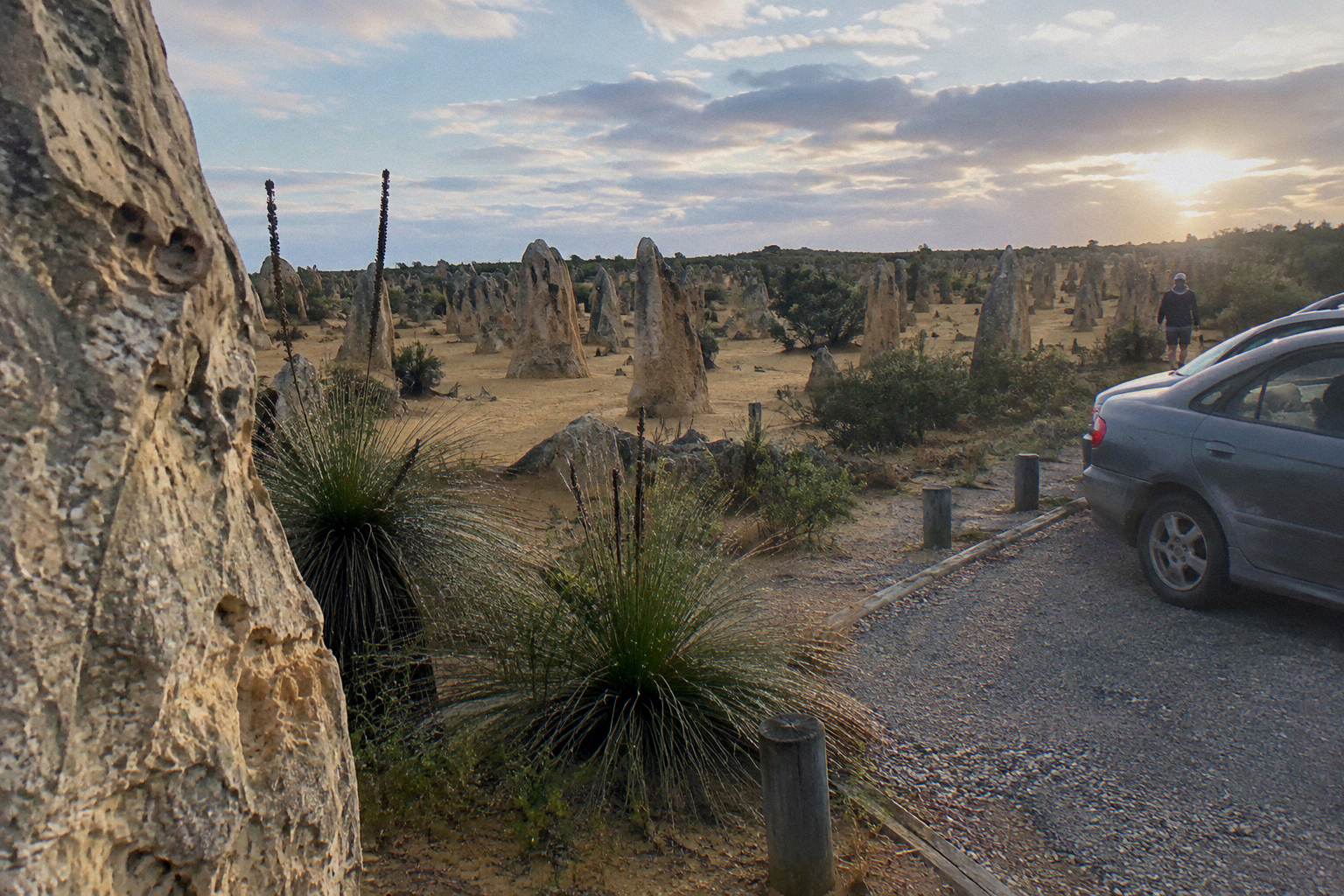
That is the real value of the guided format for a timing focused trip. Self driving means matching your arrival to darkness, finding parking, and managing the drive back to Perth late at night on a road network where coverage drops out. A tour absorbs all of it, and the operator's calendar is effectively a list of pre validated dates, so the only planning a visitor does is picking the right night. Prices vary by date and group, and the live price for a given night appears on the booking page.
The Lumineer Sunset Dinner Stargazing tour is the category's benchmark, 4.8 from 1,155 reviews, from AU$220 per person over nine and a half hours, with park entry, Perth CBD hotel pickup, sandboarding, a meal and stargazing included, and a minimum age of 2 that makes it one of the few dark sky options open to toddlers. For a family weighing months, that low age floor widens the choice beyond the cold season question, because a tour that welcomes two year olds also tends to suit a warmer, later evening.
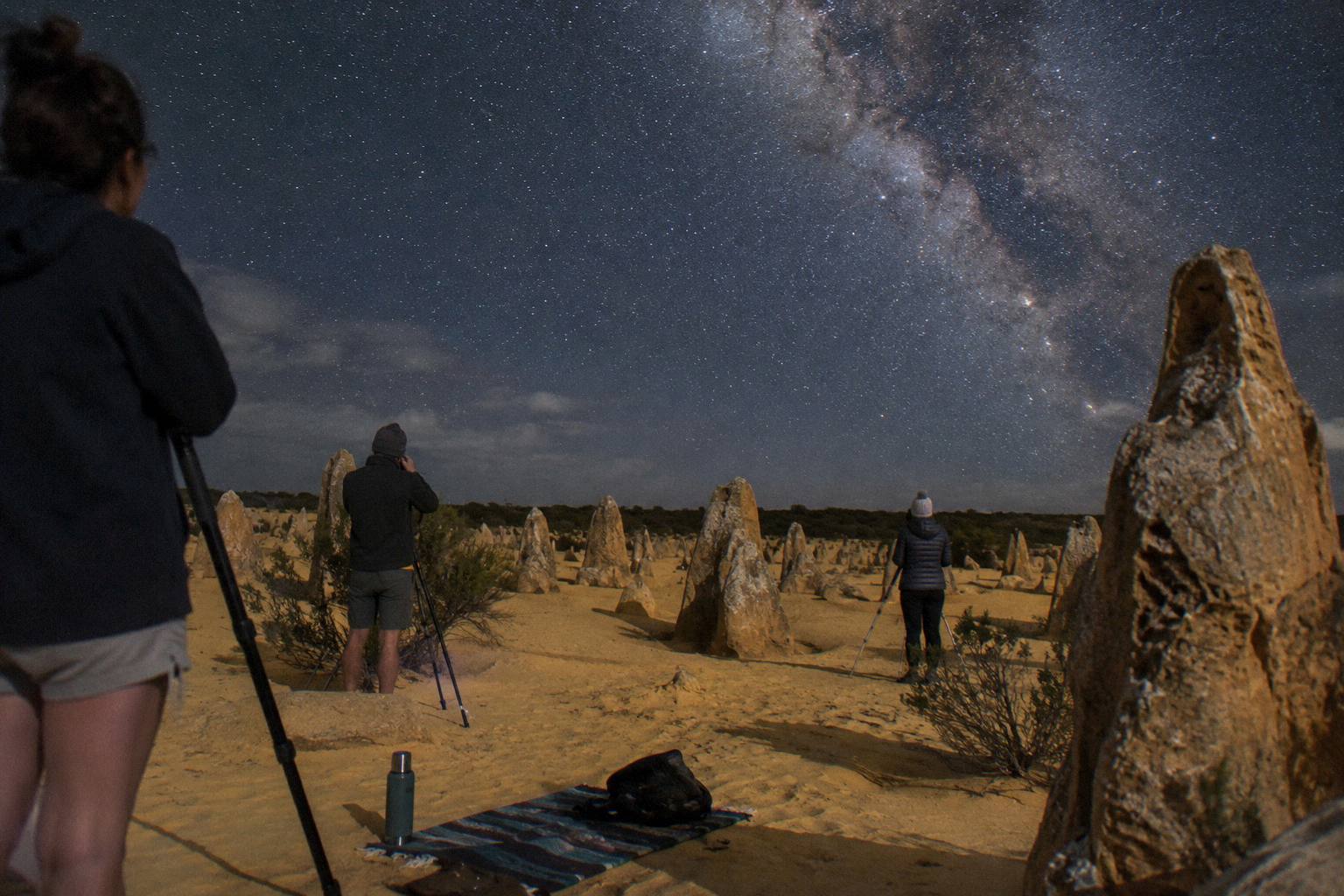
Autopia's Small-Group Sunset Dinner Stargazing experience, from AU$199 per person, 4.6 from 473 reviews, runs nine hours with a minimum age of 6, and suits travellers who want fewer people at the telescope for the same moon window. Whichever product fits, the timing method in the earlier sections holds: pick the month from the rainfall table, pick the night from the moon calendar, then let the operator's calendar confirm the seat. See dates and live prices for the night you want before committing accommodation around it.
What Trips People Up When Timing A Stargazing Trip
The three recurring mistakes are booking a full moon week by accident, assuming winter is hopeless because it is wet, and treating a rainfall average as a forecast for one night. Each is avoidable. Checking a moon calendar before booking removes the first, holding dates loosely with 24 hour cancellation removes the second, and reading the monthly table as odds rather than prediction removes the third.
The full moon mistake is the most common because calendars sell out and dates migrate. A trip planned three months ahead around a new moon weekend can drift a week later in the settling, land on a bright gibbous moon, and quietly halve the sky. Fix it by rechecking the moon phase the week you book transport, not just the week you book the tour. The winter mistake runs the other way: June and July average 106.6 and 111.1 mm of rain, but they also deliver the coldest, clearest individual nights of the year when a high pressure system sits over the coast, and travellers with flexible dates can catch them. The forecast mistake is subtler. A month with 41.8 mm average rain still holds clear nights, and a month with 6.0 mm still holds cloudy ones, so the final go or no go call belongs to the forecast on the day and, on a guided trip, to the operator.
One last trap deserves its own sentence: the moon and the weather interact. A clear night near a full moon is fine for landscape and moon photography and poor for faint stars, while a cloudy night near a new moon delivers nothing at all, so plan both variables rather than optimising one.
Common Questions About Stargazing Months And Moon Phases
What Are The Best Months For Pinnacles Stargazing?
The cooler months, roughly March to October, are the clearest on this coast. Within that span, the April to May and September to October shoulders balance modest rainfall against mild evenings, while June and July are the wettest months on the Jurien Bay record at 106.6 and 111.1 mm.
Does The Moon Phase Really Change What You Can See?
Yes, and by a wide margin. Around a new moon the sky above the Pinnacles reaches its darkest and faint stars are visible; near a full moon the sky brightens enough to wash out all but the brightest objects. Treat the nights within about a week of a new moon as the prime window.
Which Moon Phase Is Worst For Stargazing?
A full moon, and the two to three nights either side of it. The moon is up all night then, and its light dominates the faint sky. A waxing gibbous moon is nearly as bright for the first half of the night.
Is Winter Too Cloudy For A Pinnacles Stargazing Tour?
Not necessarily. June and July are the wettest months on average, but individual clear winter nights are among the best of the year. Book with the 24 hour free cancellation that the shared stargazing tours carry, watch the forecast, and rebook a neighbouring night if cloud rolls in.
How Far Ahead Should You Book A New Moon Night?
Earlier than an ordinary night. Prime moon windows concentrate demand into a handful of dates each month, so seats on the best nights go first. Lock in the moon phase you want and rely on free cancellation up to 24 hours before start if plans shift.
Can You See Stars At The Pinnacles In Summer?
Yes. December through February is the driest stretch of the Jurien Bay record, 6.0 to 15.2 mm a month, and evenings are warm. The trade offs are a late sunset that pushes dark sky time back, and DBCA's note that summer carries possible extreme fire danger. Time a summer trip around a new moon and it can be excellent.
Planning the wider trip pairs naturally with this one. The seasonal overview in the best time to visit the Pinnacles covers daytime and wildflower angles, and Pinnacles Desert Tours keeps the full set of timing guides, including monthly sunset times, in one place.