What To Wear And Bring For A Pinnacles Sunset
Sunset at the Pinnacles can swing from a 30 degree afternoon to a 9.5 degree night within a few hours, so what you wear and carry decides how the second half of the evening feels. Here is what the climate record and park guidance say to prepare for.
Short answer
Bring layers for every season: Jurien Bay averages mean winter nights near 9.5 degrees C and summer afternoons near 30. Wear closed shoes that handle sand for the 1.2 km sandy section of the Desert View Walk Trail, carry water, and load the Emergency+ app because mobile coverage is patchy in parts of Nambung National Park. Tour dinners appear only where the product names a meal.
Most sunset trips to the Pinnacles run as shared departures of roughly nine hours that leave Perth in the afternoon and return after dark, and you can compare them on the Sunset Stargazing Adventure tour page. Your packing question is therefore a long-evening question: what keeps you comfortable across an afternoon drive, a walk among the pillars at dusk, and an hour or two of night air before the ride home. The answer below comes from the Bureau of Meteorology's Jurien Bay climate record, the closest long-term station to the park, and from the parks authority's own guidance on trails, heat and phone coverage.
| Fact | Detail |
|---|---|
| Nearest climate station | Jurien Bay, Bureau of Meteorology station 009131 |
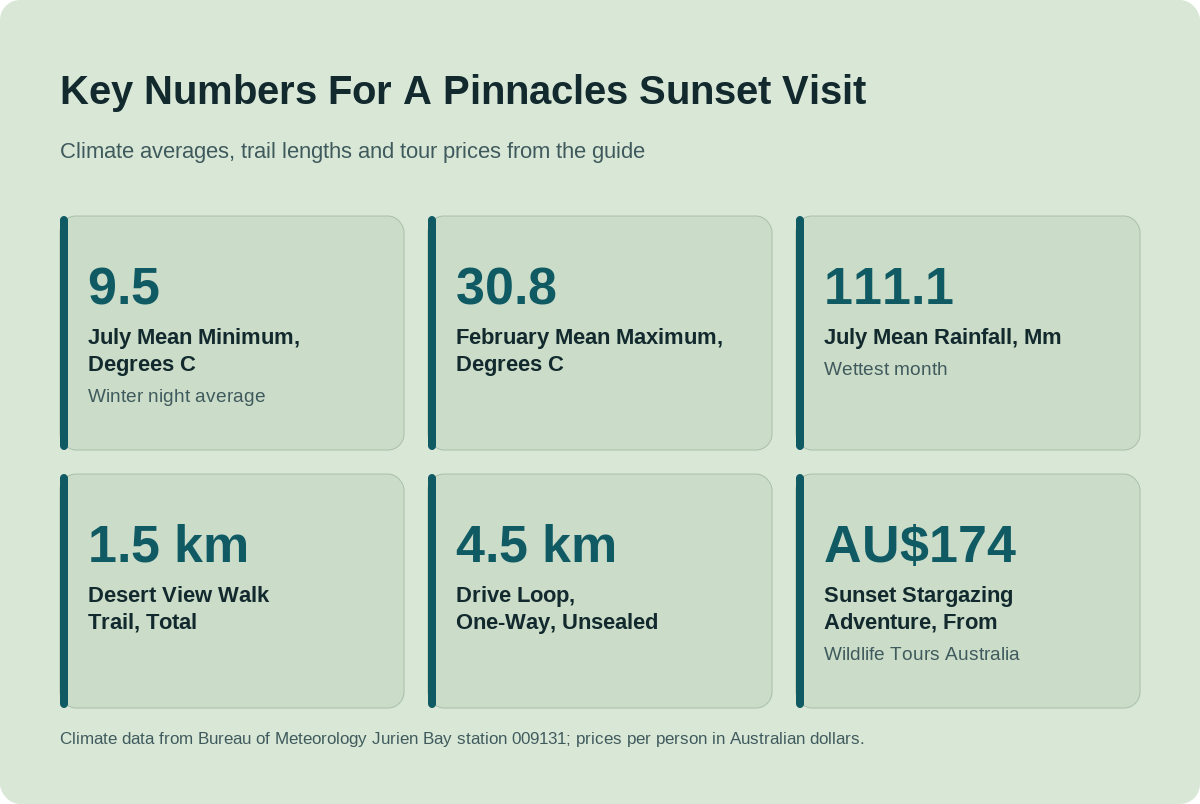
| Winter night average (July) | 9.5 degrees C minimum |
| Summer afternoon average (February) | 30.8 degrees C maximum |
| Wettest months | June 106.6 mm and July 111.1 mm mean rainfall |
| Walk trail | Desert View Walk Trail, 1.5 km total, 300 m accessible path then 1.2 km sandy |
| Drive loop | About 4.5 km one-way, unsealed |
| Visitor centre hours | 9:30 am to 4:30 pm daily, closed Christmas Day |
| Mobile coverage | Patchy or absent in parts; Emergency+ app advised |
How Cold Does It Get After Sunset At The Pinnacles?
Expect a real drop, not a gentle one: Jurien Bay's climate record shows winter minimums averaging 9.5 degrees C in July and summer evenings falling from afternoon peaks near 30 degrees to minima near 16 to 18 degrees. A nine-hour tour that leaves Perth in warm sun can finish in air cold enough that a jacket earns its place in your bag, because layers beat a single warm coat when afternoon and night belong to different wardrobes.
The Bureau of Meteorology's Jurien Bay table, station 009131 with a record running since 1968, is the closest long-term climate data to Nambung National Park, and its monthly averages frame every packing decision. Mean maximums sit at 30.1 degrees in January, peak at 30.8 in February, and slide to 19.6 by July. Mean minimums run from 17.3 degrees in January down to 9.5 in July. Rainfall concentrates hard in winter: June averages 106.6 mm and July 111.1 mm, while December averages just 6.0 mm.
What that means in plain terms: between April and October, the gap between the day's warmest hour and the night's coldest is regularly 10 to 14 degrees. A sunset visitor in August experiences a mild afternoon around 20 degrees and a night that averages 9.5. In February the afternoon is hot and the night still falls to about 18, which is comfortable in a t-shirt but noticeably cooler in wind between the pillars. The full monthly breakdown, including what it means for choosing a travel month generally, sits in the season-by-season weather guide.
Wind deserves a mention even though no wind average sits in the table. The Pinnacles sit on an exposed sand plain a short distance from the coast, and evening breeze on warm desert sand cools fast. A windproof outer layer is the piece most often wished for and least often packed.
What Should You Wear For A Pinnacles Desert Sunset?
Dress in three layers you can shed or add across the evening: a breathable base for the afternoon drive, a warm mid-layer for dusk, and a windproof outer for the hours after dark. In winter, June to August, treat the night as a 9.5 degree event and bring a jacket, beanie and gloves. In summer, a light long-sleeve shirt for sun protection plus one warm layer for the ride home is enough.
The seasonal table below translates the Jurien Bay averages into clothing calls. The rainfall column matters as much as the temperatures: a July sunset trip carries a real chance of showers, so a rain shell is sensible from May through September, while the December to March window is effectively dry, averaging 6.0 to 16.9 mm for the whole month.
| Season | Mean max / min (C) | Mean rain | What to wear |
|---|---|---|---|
| Summer, Dec to Feb | 28.4 to 30.8 / 15.8 to 18.0 | 6.0 to 15.2 mm | Light, loose clothing, long sleeves for sun, one warm layer for after dark |
| Autumn, Mar to May | 29.5 falling to 23.4 / 16.8 falling to 11.7 | 15.1 rising to 73.3 mm | Layers plus a light jacket; rain shell from late April |
| Winter, Jun to Aug | 19.6 to 20.6 / 9.5 to 10.3 | 82.2 to 111.1 mm | Warm jacket, beanie, gloves, waterproof outer layer |
| Spring, Sep to Nov | 21.4 rising to 26.0 / 10.0 rising to 13.8 | 16.9 to 41.8 mm | Warm layer for early spring evenings, light jacket by November |
Colour and fabric are practical choices here, not style ones. Pale sand sticks to dark clothing and shows on every fabric, so earth tones or lighter colours hide the dust of the walk trail better than black. Closed footwear, long trousers and sleeves also make the stargazing half of the evening more comfortable: you will be standing still in night air, and still bodies feel the cold far more than walking ones do.
Sunset itself is the anchor of these trips, and its timing shifts by more than an hour and a half across the year, which changes how much daylight-warm part of the evening you get before the cold arrives. The month-by-month sunset times guide works through that calendar in detail.
For travellers comparing the shared options, three sunset and stargazing products cover the main formats and price points.
Amounts are Australian dollars, vary by date, and the booking page shows the price for the date you choose.
What Shoes Work On The Pinnacles Walk Trails?
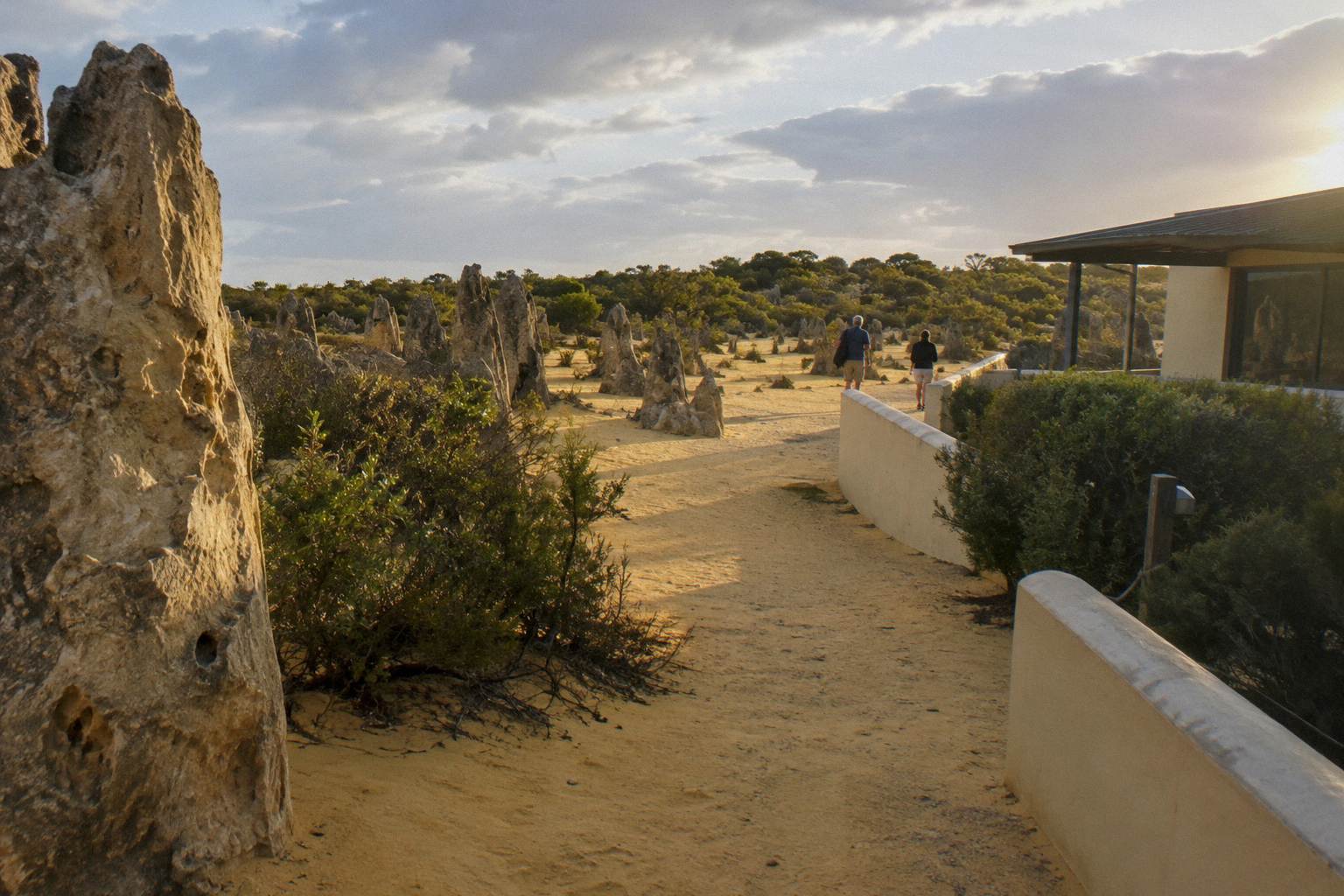
Wear closed, comfortable shoes you would happily walk 1.5 km in, with a sole that grips soft sand. The Desert View Walk Trail starts with a 300 m Class 1 accessible path to a viewing platform, then continues for 1.2 km as a Class 3 sandy trail among the pillars, and that sandy section is where thin-soled shoes and slides let people down. Thongs survive the boardwalk stretch and fail the sand.
The parks authority describes the trail exactly in those terms: a short paved, accessible section, then soft sand. Sand walking is slower and more tiring than path walking, and on a cool night feet in open shoes get cold first. A lightweight trainer or a closed walking sandal with straps handles both halves of the trail; a sturdy hiking boot is more shoe than the distance needs.
One rule from the lookout page matters more than any footwear choice: never climb on the pinnacles. The limestone columns are fragile, some are sharp-edged, and footing on them is unreliable in low light. The DBCA Pinnacles Desert lookout page states the climbing ban alongside its description of the drive trail, and dusk is precisely when a fall risk rises as light falls.
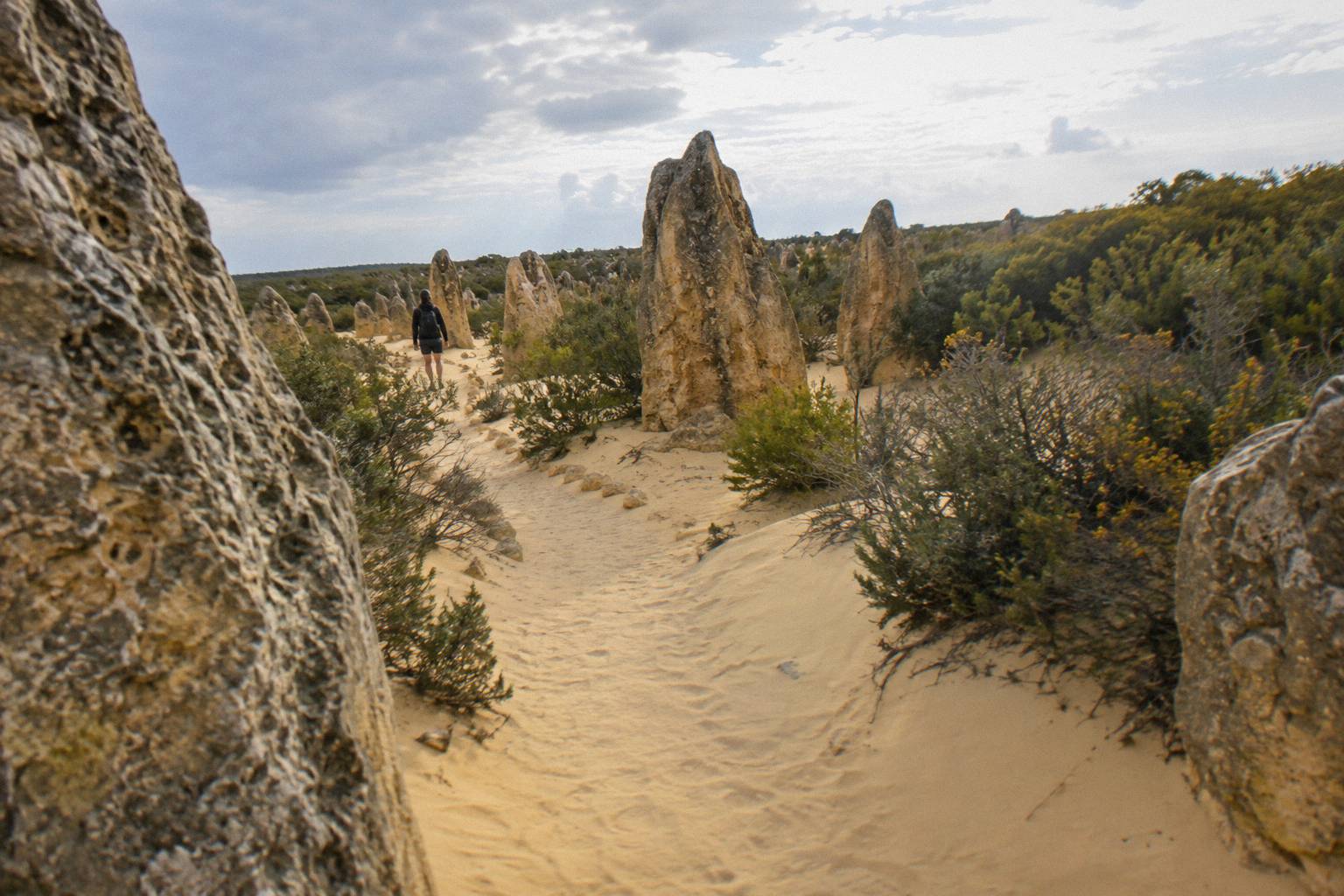
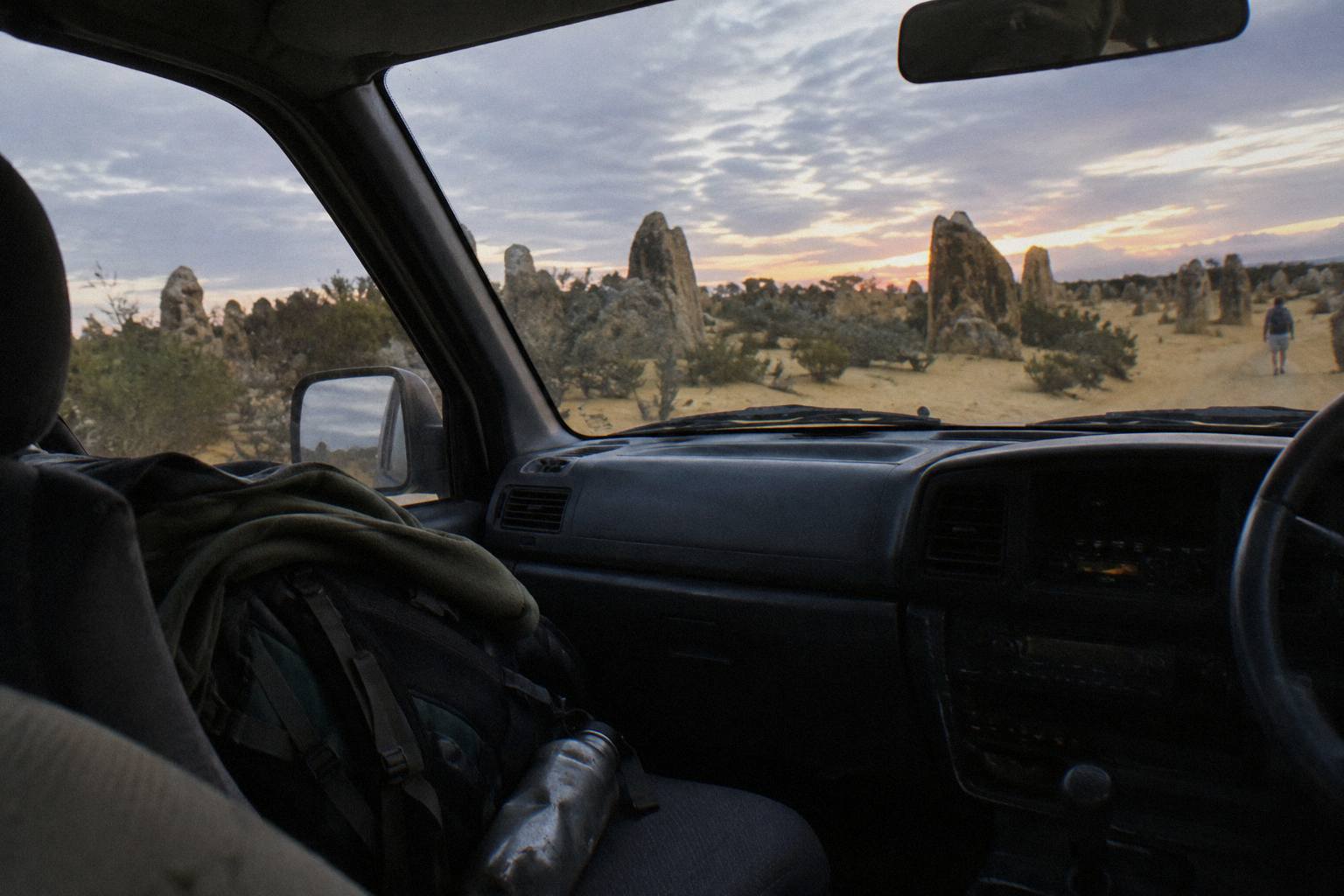
The drive loop asks less of you than the walk but rewards the same footwear logic. The loop runs about 4.5 km one-way, unsealed, with parking bays where the vehicle stops and everyone steps out onto sand for photos and sunset viewing. You will walk short sandy distances repeatedly over the evening, which adds up.
| Trail section | Class and surface | Footwear that works | Footwear that struggles |
|---|---|---|---|
| 300 m accessible path | Class 1, paved to viewing platform | Any shoe | None |
| 1.2 km among the pillars | Class 3, soft sand | Trainers, closed walking sandals, light boots | Thongs, heels, stiff dress shoes |
| Drive loop parking bays | Unsealed surface | Any closed shoe | Smooth-soled dress shoes |
The Wildlife Tours Australia "Sunset Stargazing Adventure" pairs the walk and the drive with a 9 hour format from AU$174 per person, rated 4.7 from 89 reviews, with park entry, Perth CBD pickup, a meal and stargazing named as included, and free cancellation up to 24 hours before start. Check availability if that format matches your evening.
What Should You Pack For The Evening?
Pack water, a headlamp or torch, your layers, a sealed bag for phones and cameras against sand, and any personal items a long evening requires, and treat food as tour-dependent: several sunset products name a meal as included, others do not, so the difference decides whether dinner rides with the bus or with you. Water matters year-round, including winter.
Headlamps beat phone torches once stargazing begins, because a phone light kills night vision for everyone standing near you and drains the battery you may want later. A red-light mode, standard on most headlamps, preserves adapted eyes. If the evening is a photography mission rather than a general visit, the gear questions multiply considerably, and the photographing the Pinnacles light and timing guide covers those separately.
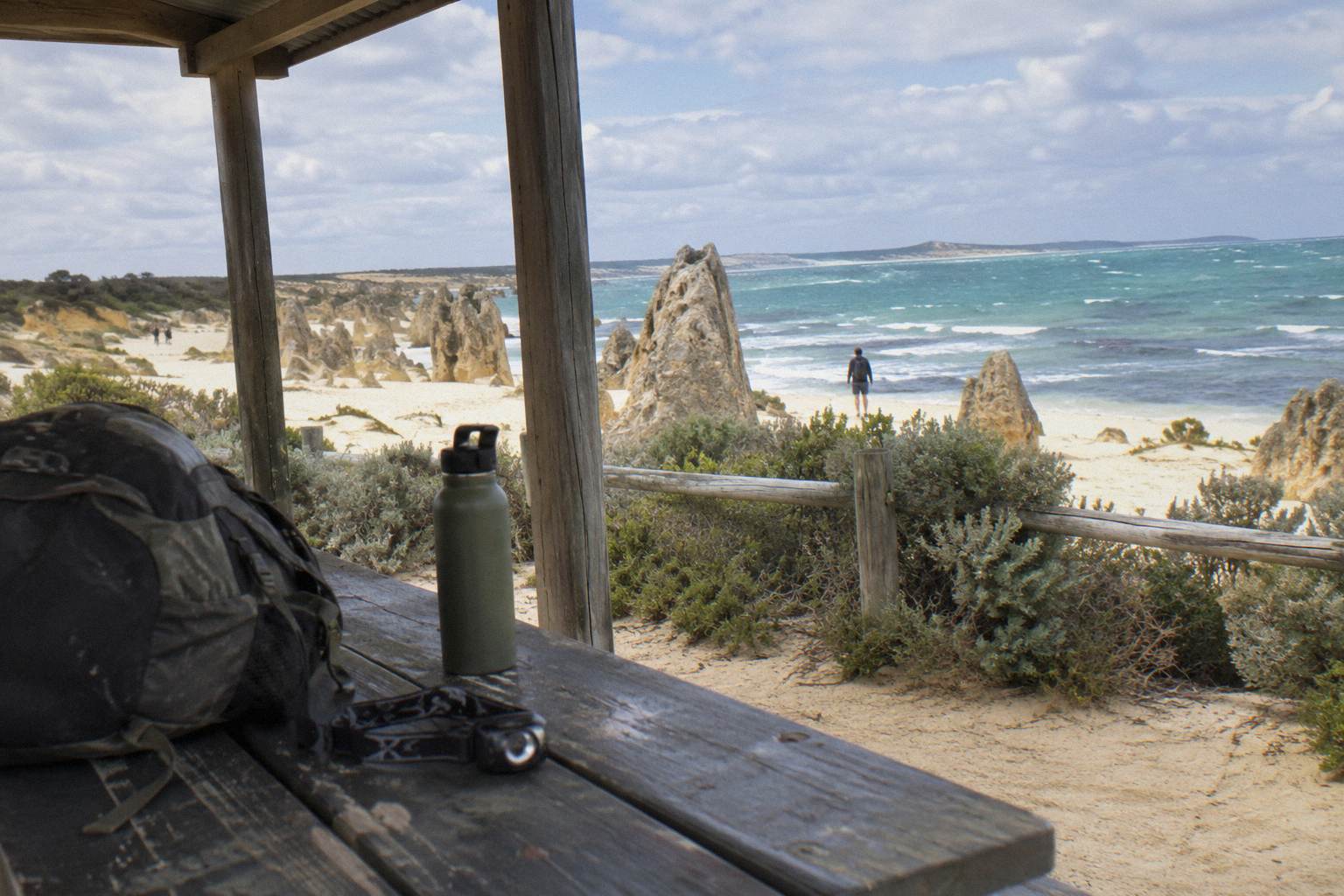
On food, the product descriptions draw the line for you. The "Lumineer Sunset Dinner Stargazing" tour names park entry, Perth CBD pickup, sandboarding, a meal and stargazing among its inclusions, from AU$220 per person, rated 4.8 from 1,155 reviews. Autopia's "Small-Group Sunset Dinner Stargazing" includes park entry, Perth CBD pickup and a meal, from AU$199 per person, rated 4.6 from 473 reviews. Where a product does not name a meal, carry snacks and plan dinner for after the return. Check the live price on your date before you decide which format to book.
The Australian Pinnacle Tours "Night-Time Stargazing" option, rated 4.4 from 131 reviews and from AU$249 per person, names Perth CBD pickup and a meal as included with a 9 hour duration, and suits travellers who want the dinner handled and do not mind a slightly higher from-price. See dates on the product page if that balance fits.
Will Your Phone Work At The Pinnacles?
Treat mobile coverage at the Pinnacles as unreliable: the park's own visitor guidance says coverage is patchy or absent in parts of Nambung National Park, and it advises loading the Emergency+ app before you go, because, in its words, "If there is no mobile phone coverage you WILL NOT be able to call 000 but the app will provide you with your GPS location." Download offline maps, screenshot your pickup details, and tell someone your plans before you leave Perth.
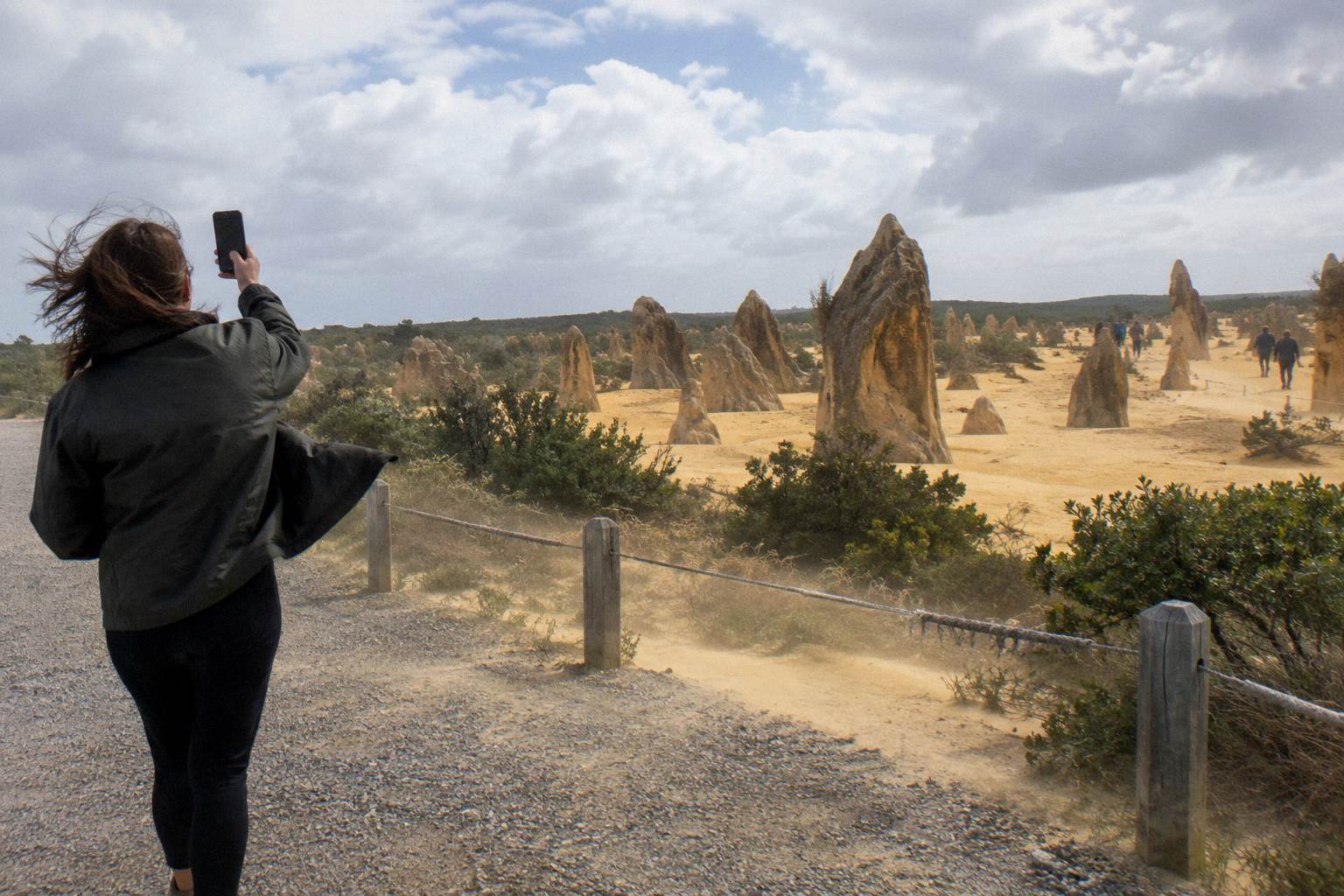
That advice comes from the parks authority's Nambung visitor guide, which pairs the coverage warning with the Emergency+ recommendation as standard preparation. On a guided sunset tour the practical weight of the warning is lighter, since your driver knows the park and the route home, but the phone-preparation habits still pay off: you will want your camera ready at dusk, battery saved for the ride back, and your booking confirmation reachable without data.
Three habits cover it. First, charge fully before pickup, because a nine-hour evening with photos and navigation drains a phone in the cold faster than at home. Second, download offline maps for the Perth to Cervantes corridor, about 197 km, so the return journey needs no signal. Third, screenshot the tour confirmation and pickup point so a dead data connection cannot separate you from your meeting details.
Does Summer Change The Packing List?
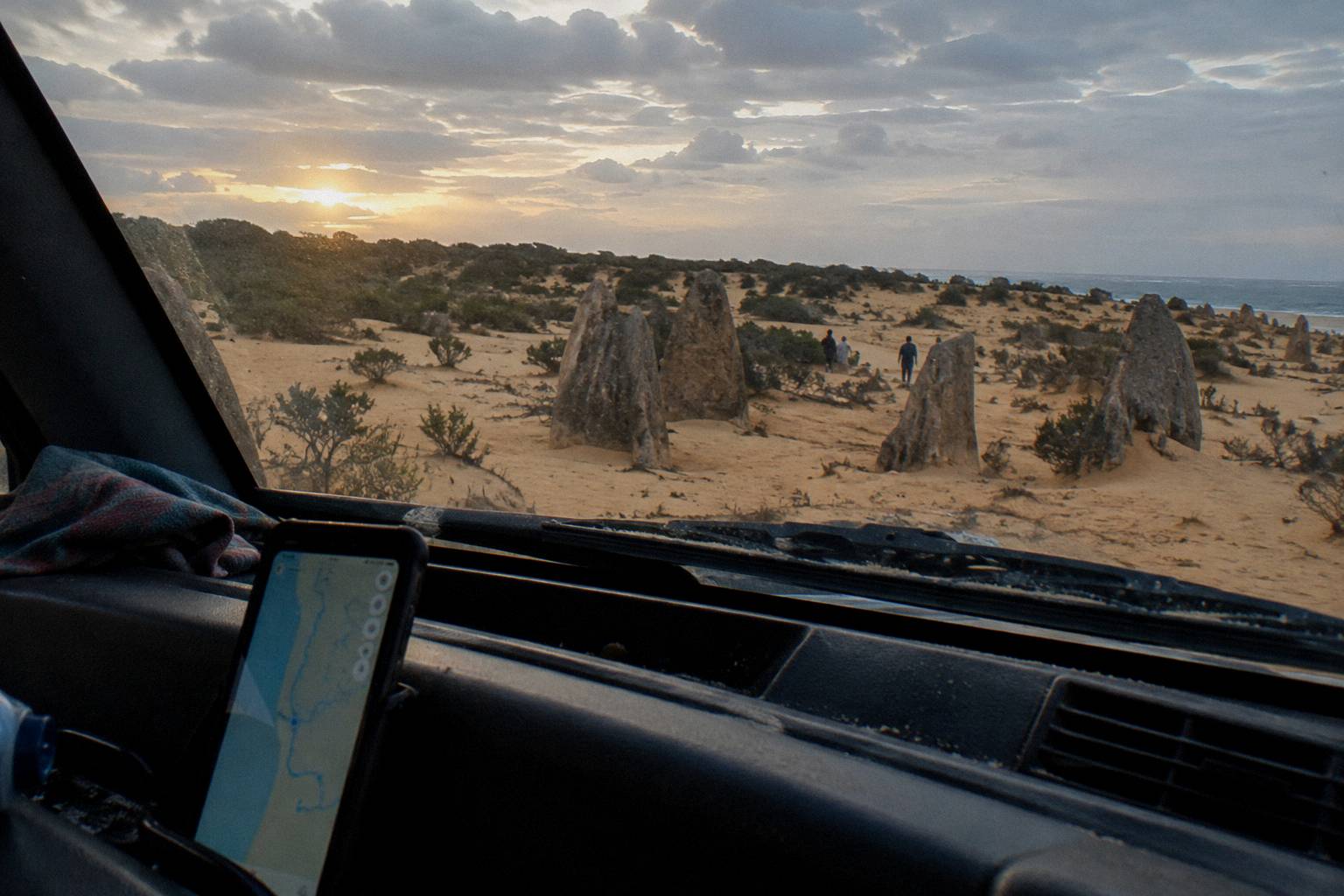
Yes, in three ways: summer afternoons average 28.4 to 30.8 degrees C, so sun protection and water move to the top of the list; the parks authority warns that December to March brings extreme fire danger and advises carrying a personal location beacon for park visits; and rainfall all but disappears, with December averaging 6.0 mm, so a rain shell becomes dead weight while a hat and sunscreen become essential.
The fire-danger point is the one most visitors never hear. The DBCA Nambung visitor guide describes the December to March window as hot and dry with extreme fire danger possible, and recommends a personal location beacon as part of remote-area preparation. Guided tours manage this risk operationally, but knowing the season shapes your own water and clothing choices regardless.
Summer evening packing, in order of importance: water in quantities beyond what you think you need, a broad-brimmed hat for the pre-sunset walk, sunscreen applied before you leave the vehicle, sunglasses for the low-angle western light, and one warm layer for the ride home, because even February nights average a minimum of 18 degrees after a 30 degree day. Insect repellent earns a place in the warmer months for the dusk hour.
Winter flips the list. Rain shells and warm layers dominate, and the June and July rainfall averages of 106.6 and 111.1 mm mean a wet evening is a live possibility rather than a surprise. Waterproof shoes or a spare pair of socks in the daypack rescue a sandy, rain-dampened walk trail. The climate averages behind these calls come from the Bureau of Meteorology Jurien Bay table.
Tour2Holiday's "Koalas, Pinnacles Sunset & Stargazing Tour with Homemade Dinner" runs 9 hours 30 minutes from AU$209 per person with a meal named as included and free cancellation up to 24 hours before start, a reminder that dinner logistics, and therefore your packing, vary product by product even within the same evening format.
What Does Your Tour Already Provide?
Read your product's inclusions before you pack, because the lineup shows real differences: some sunset trips name park entry, a meal and stargazing as included, others name only some of those, and the private sunset products add pickup and a lobster dinner at higher from-prices. Packing for a trip that feeds you is a lighter bag than packing for one that does not.
The pattern is easiest to see side by side. Wildlife Tours Australia's "Sunset Stargazing Adventure", from AU$174 per person, names park entry, Perth CBD pickup, a meal and stargazing. Autopia's small-group product, from AU$199, adds sandboarding-free simplicity with a meal and entry. The premium private option from Perth Private Tours, "Private Pinnacles Sunset and Stargazing Tour with Lobster Dinner", from AU$700 per person, names Perth CBD pickup and a meal with an 8 to 12 hour flexible duration, and pickup and drop off included.
| Product | From price | Meal named | Park entry named | Pickup named |
|---|---|---|---|---|
| Sunset Stargazing Adventure, Wildlife Tours Australia | AU$174 per person | Yes | Yes | Inner-city Perth pick-up points |
| Small-Group Sunset Dinner Stargazing, Autopia Tours | AU$199 per person | Yes | Yes | Selected inner-city pick-up points |
| Night-Time Stargazing, Australian Pinnacle Tours | AU$249 per person | Yes | No | Hotel pick-up and drop-off |
| Private Sunset and Stargazing with Lobster Dinner, Perth Private Tours | AU$700 per person | Yes | No | Pick up and drop off included |
All amounts are Australian dollars, vary by date and group, and each product's booking page shows the price for the date you choose. Where a column shows no entry flag, ask the operator or check the booking page for that product rather than assuming either way. The related Sunset Stargazing Adventure tour page lays out that product's full detail, and it is the one this article keeps returning to as the balance of price, inclusions and review pool, at 4.7 from 89 reviews.
For travellers weighing the whole decision rather than just the packing, Pinnacles Desert Tours exists to make that comparison concrete: prices, durations, ages and inclusions for every sunset-format product in one place.
What Trips People Up Before You Go
Four mistakes dominate: dressing for the afternoon instead of the night, wearing shoes that fail in sand, arriving with a phone plan that assumes coverage, and packing food for a trip that already feeds you, or the reverse. Each one is avoidable with the climate table, the trail description, your product's inclusion list and one app download. None of them cost money to fix, only attention.
The clothing mistake is the most common because Perth afternoons mislead. Boarding a warm bus in a t-shirt feels right, and 9.5 degree night air two hours after sunset feels like a different trip. The fix is one warm layer and one windproof layer in the daypack, every month of the year, with full winter kit from June to August.
The shoe mistake shows up on the 1.2 km sandy half of the walk trail, where thongs and dress shoes turn a short stroll into a slow, cold shuffle. The phone mistake shows up as a dead battery and no offline map on the return drive. The dinner mistake cuts both ways: carrying a heavy meal onto a tour that feeds you, or running an eight-plus-hour evening on nothing because a lower-priced product did not name a meal. The inclusion list on your product page answers it before you leave home.
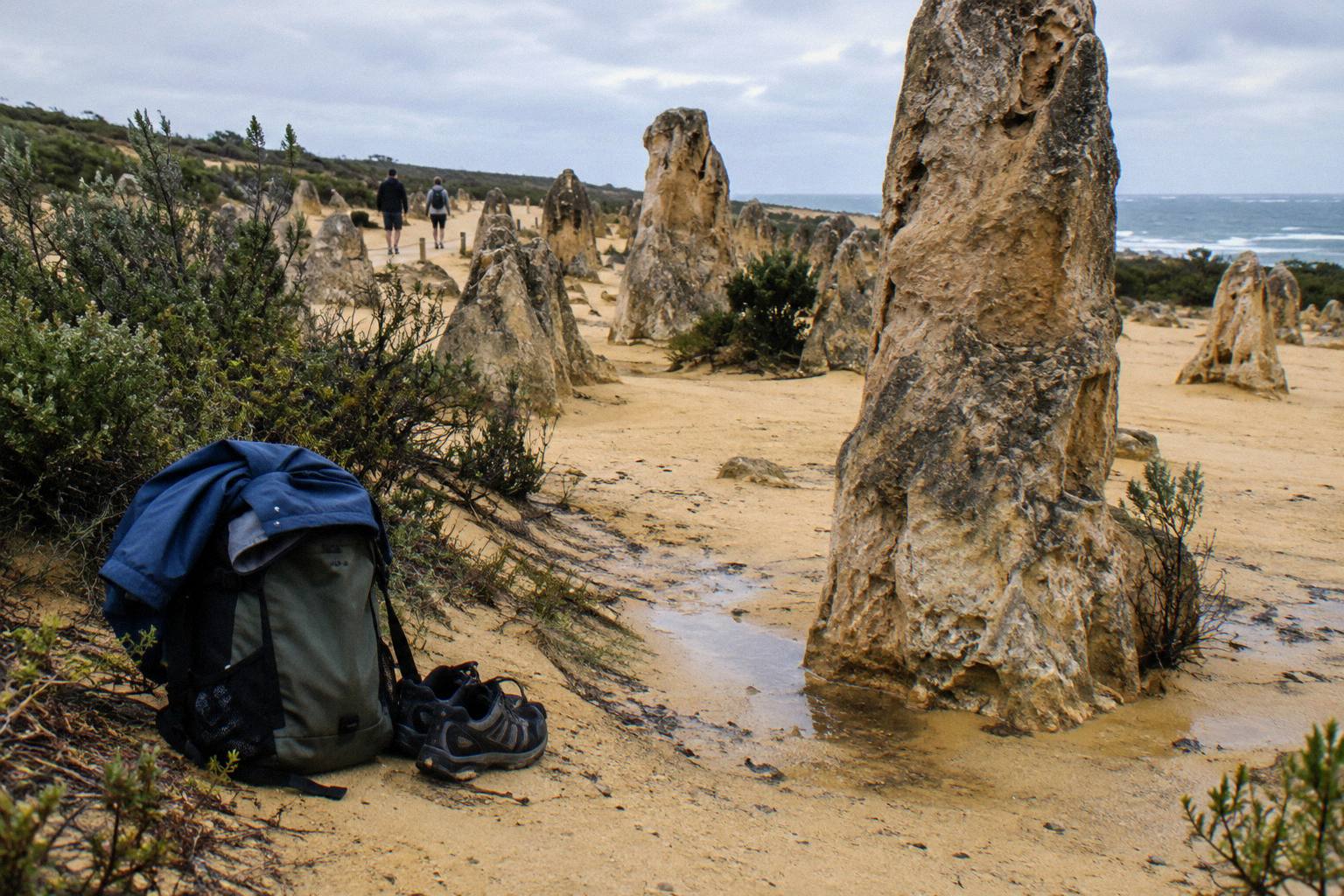
Whatever the format, the packing core does not change: layers for a 10 to 20 degree temperature swing, closed shoes for soft sand, water, a headlamp, the Emergency+ app, and food plans matched to what your own product includes.
Common Questions About Packing For A Pinnacles Sunset
How Cold Does It Get At The Pinnacles After Sunset?
Jurien Bay climate averages show winter minimums of 9.5 to 10.3 degrees C from June to August, and summer minimums of 15.8 to 18.0 degrees. Plan for the temperature to fall 10 degrees or more between afternoon and night in most months.
What Shoes Should I Wear For The Pinnacles Walk Trail?
Closed, comfortable shoes with grip. The Desert View Walk Trail has a 300 m accessible paved path then 1.2 km of soft sand, so thongs and dress shoes struggle on the sandy section.
Will I Have Phone Signal At The Pinnacles?
Park guidance says mobile coverage is patchy or absent in parts of Nambung National Park. Download offline maps, screenshot your booking details, and load the Emergency+ app before you leave Perth.
Do I Need To Bring Food On A Sunset Tour?
Only if your product does not name a meal. Several sunset products include dinner, such as the Wildlife Tours Australia and Lumineer tours, while others do not, so check your product's inclusions and carry snacks if no meal is named.
Do I Need A Rain Jacket?
From May to September, yes: June averages 106.6 mm and July 111.1 mm of rain at Jurien Bay. From December to March rainfall averages 6.0 to 16.9 mm per month, so a rain shell is unnecessary weight.
Can I Climb On The Pinnacles For A Better Photo?
No. The parks authority states plainly that visitors must never climb on the pinnacles. The columns are fragile and sharp-edged, and low light at dusk makes footing on them unreliable.