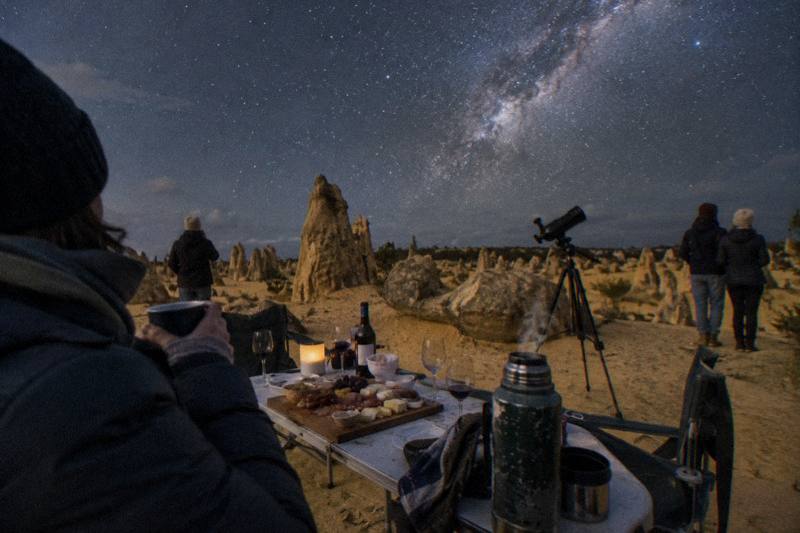
Pinnacles Sunset Times By Month
Sunset at the Pinnacles swings from its earliest around June to its latest around early January, and that swing sets the departure time of every sunset tour from Perth.
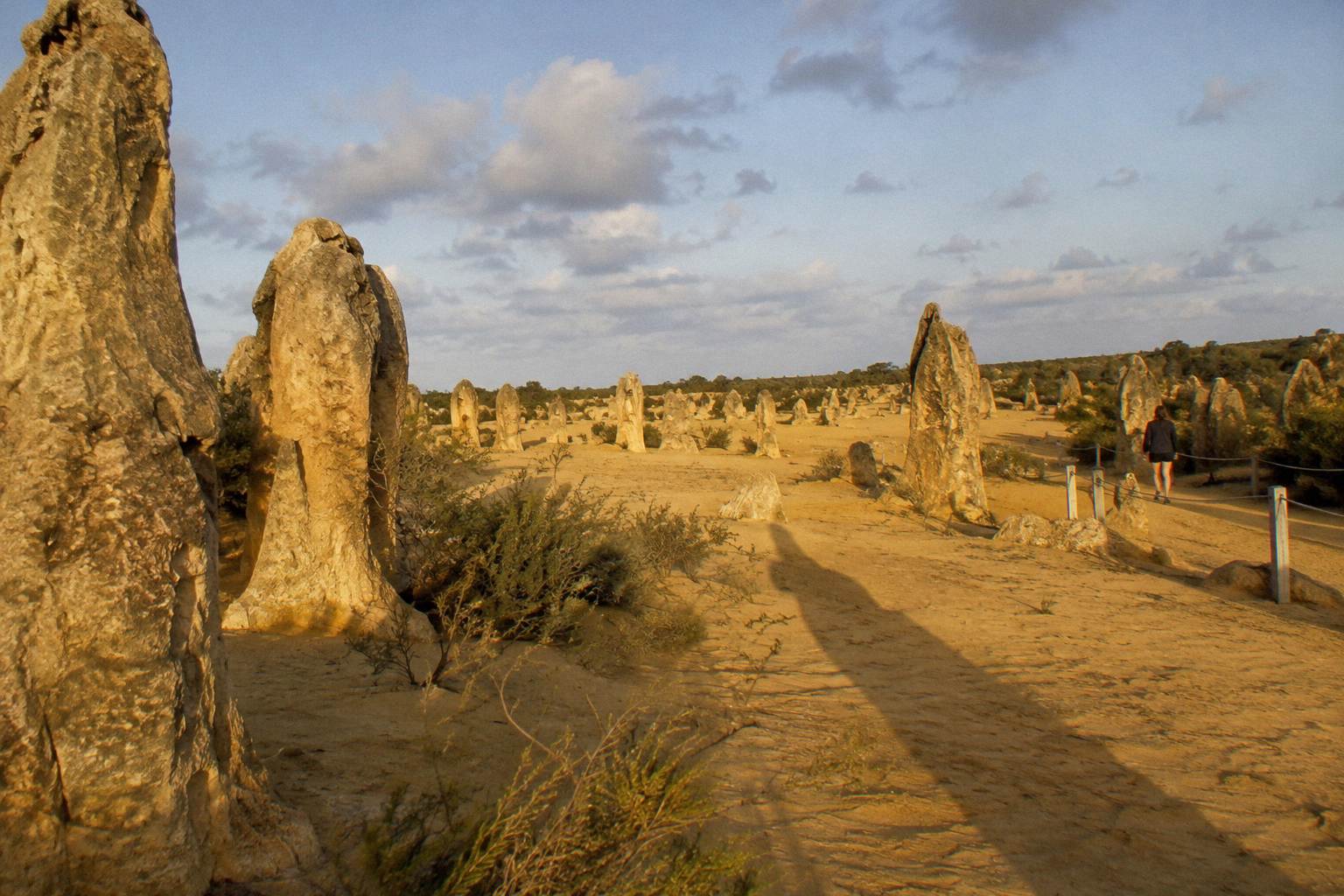
Short answer
Sunset near the Pinnacles is earliest around June and latest around early January, shifting by roughly two hours across the year. Sunset tours from Perth run 9 to 9 hours 30 minutes, and the exact departure time is set on the booking calendar rather than fixed in advance. Pick a month first, then check dates for that month.
Sunset trips are the core of the Autopia small-group sunset dinner experience, and almost every question about them comes back to timing. The sun does not set at a fixed hour near Nambung National Park, it slides across the year, and a departure that leaves Perth in daylight in winter leaves in full afternoon glare in summer. Here is how the year breaks down, month by month, and how that lines up with the tours themselves.
| Fact | Detail |
|---|---|
| Earliest sunset | Around June |
| Latest sunset | Around early January |
| Where times are set | On the booking calendar for each departure |
| Sunset tour durations | 9 hours to 9 hours 30 minutes |
| Nearest climate station | Jurien Bay, Bureau of Meteorology station 009131, record from 1968 |
| Hottest mean maximum | February, 30.8 degrees C |
| Coolest mean minimum | July, 9.5 degrees C |
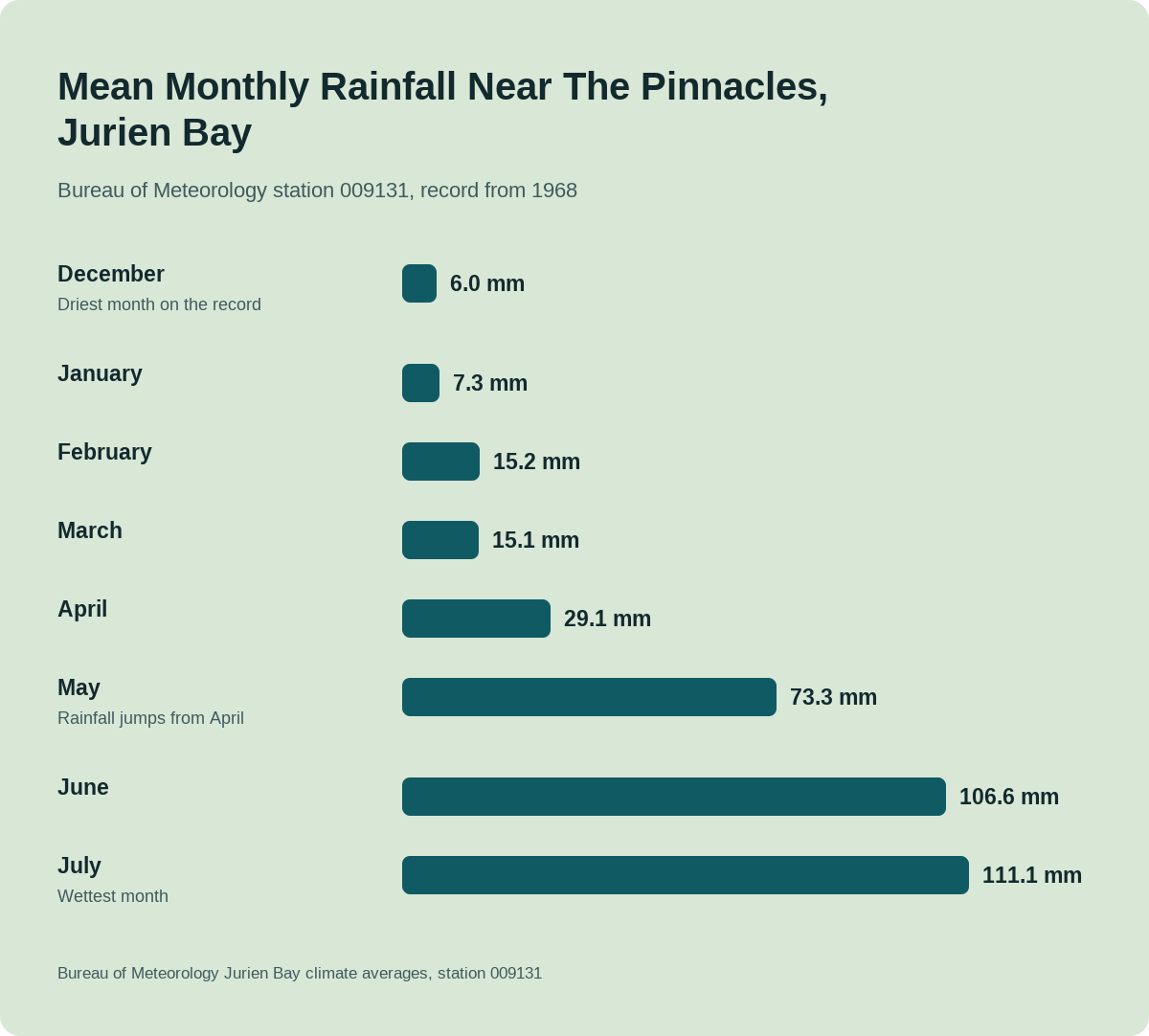
| Wettest months | June 106.6 mm and July 111.1 mm |
When Does The Sun Set At The Pinnacles Through The Year?
Sunset near the Pinnacles is earliest around June and latest around early January, a swing of roughly two hours, and no operator publishes a fixed departure clock time because of it. Every sunset product sets its start time on the booking calendar, matched to the season you book. Sunset departures from Perth run 9 hours to 9 hours 30 minutes door to door, so the day is planned backwards from the sun.
The reason the swing matters so much here is distance. Perth sits about 200 km south of Nambung National Park, and the drive from the city to Cervantes runs roughly 197 km, about two hours on the road. A sunset tour has to leave Perth early enough to reach the desert, run its stop at the pillars, and serve dinner before the light goes. In June, when the sun drops early, the whole day compresses. In early January, when it lingers, the same itinerary stretches out with the pickup happening in brighter, warmer conditions.
What does not change is the product shape. Operators such as Lumineer Adventure Tours, Autopia Tours, Australian Pinnacle Tours and Wildlife Tours Australia all run the same broad arc: Perth pickup, the drive north, time among the pillars as the light lowers, a meal, and stargazing after dark. The Pinnacles Desert Tours lineup lists these departures with their durations, and every one of them is built around the year's sunset drift rather than against it. When a departure time appears on a booking calendar, it has already been adjusted for the month.
For planning purposes, think in seasons rather than dates. Winter means an early finish and a cold, very dark night sky. Summer means a late start, a hot afternoon drive, and a long evening. Spring and autumn sit between the two, and both carry extras: wildflowers from August to October per the DBCA park page, and milder driving temperatures than February's 30.8 degree C mean maximum recorded at the Bureau of Meteorology's Jurien Bay station.
Summer Sunsets At The Pinnacles: December To February
Summer is the season of late sunsets at the Pinnacles, with the latest point arriving around early January, so tours leave Perth later and finish well into the night. Expect hot conditions, as Jurien Bay mean maximums run from 28.4 degrees C in December up to 30.8 in February, but rainfall sits at its yearly lowest, just 6.0 mm in December, so heat and long daylight matter more than cloud.
Summer is the season of extremes in both directions. The light lasts longest, giving photographers a long golden period among the pillars, and the dry air means December's 6.0 mm mean rainfall is the driest month on the Jurien Bay record. Against that, the afternoon drive north happens in serious heat, and the DBCA visitor guide notes summer carries possible extreme fire danger in the region, advising visitors to take care and consider carrying a personal locator beacon. A tour with Perth pickup and air conditioning handles the drive comfortably, but water, a hat and sunscreen for the walking portion belong in the bag.
The late sunset also reshapes the day's structure. With departure times set on the booking calendar rather than printed in advance, a January booking means an afternoon pickup and a return to Perth deep in the night, since the 9 to 9 hour 30 minute itineraries run door to door. Anyone connecting an early flight the next morning should weigh that carefully. Families with small children tend to find the winter version easier, since minimum ages on sunset products run from 2 to 6 depending on the operator, but a 9 hour 30 minute day that ends well after midnight in summer is a different proposition for a four year old than the same tour in June.
For choosing between products in summer, the differences that matter are meal arrangements and pickup scope. The "Pinnacles Desert Sunset Dinner and Stargazing Tour" from Lumineer Adventure Tours, 4.8 from 1,155 reviews, runs 9 hours 30 minutes from AU$220 per person with Perth CBD hotel pickup and return, and names park entry, sandboarding, a meal and stargazing among its inclusions. The "Pinnacles Sunset Stargazing Adventure Tour from Perth" from Wildlife Tours Australia, 4.7 from 89 reviews, is the shortest at 9 hours and the lowest from-price at AU$174 per person. Amounts are in Australian dollars, and prices vary by date, so check the live price for your month.
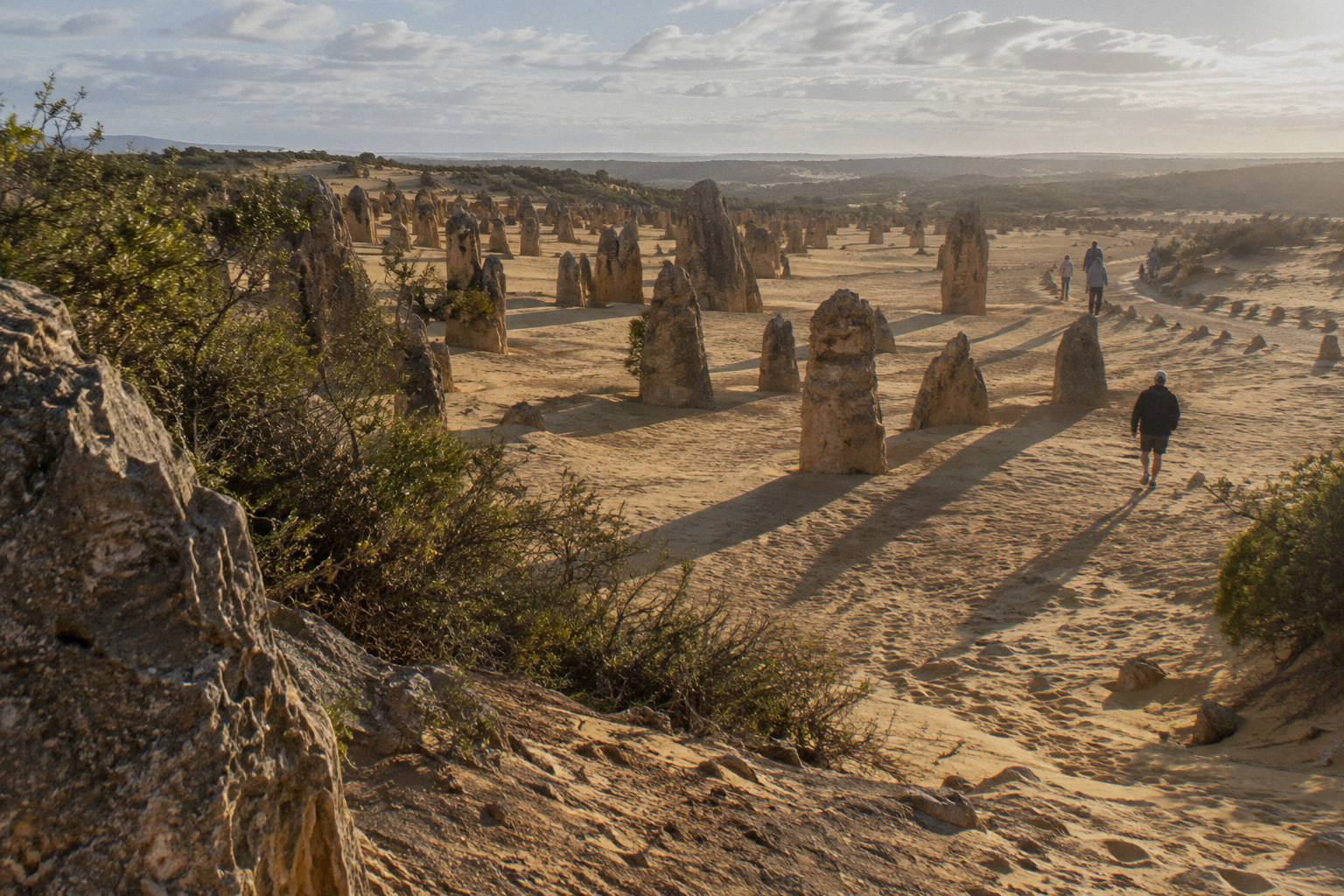
| Month | Mean Max (C) | Mean Min (C) | Mean Rainfall (mm) | Sunset Character |
|---|---|---|---|---|
| December | 28.4 | 15.8 | 6.0 | Late, trending to the year's latest around early January |
| January | 30.1 | 17.3 | 7.3 | Close to the year's latest |
| February | 30.8 | 18.0 | 15.2 | Very late, hot, warm nights |
Autumn Sunsets At The Pinnacles: March To May
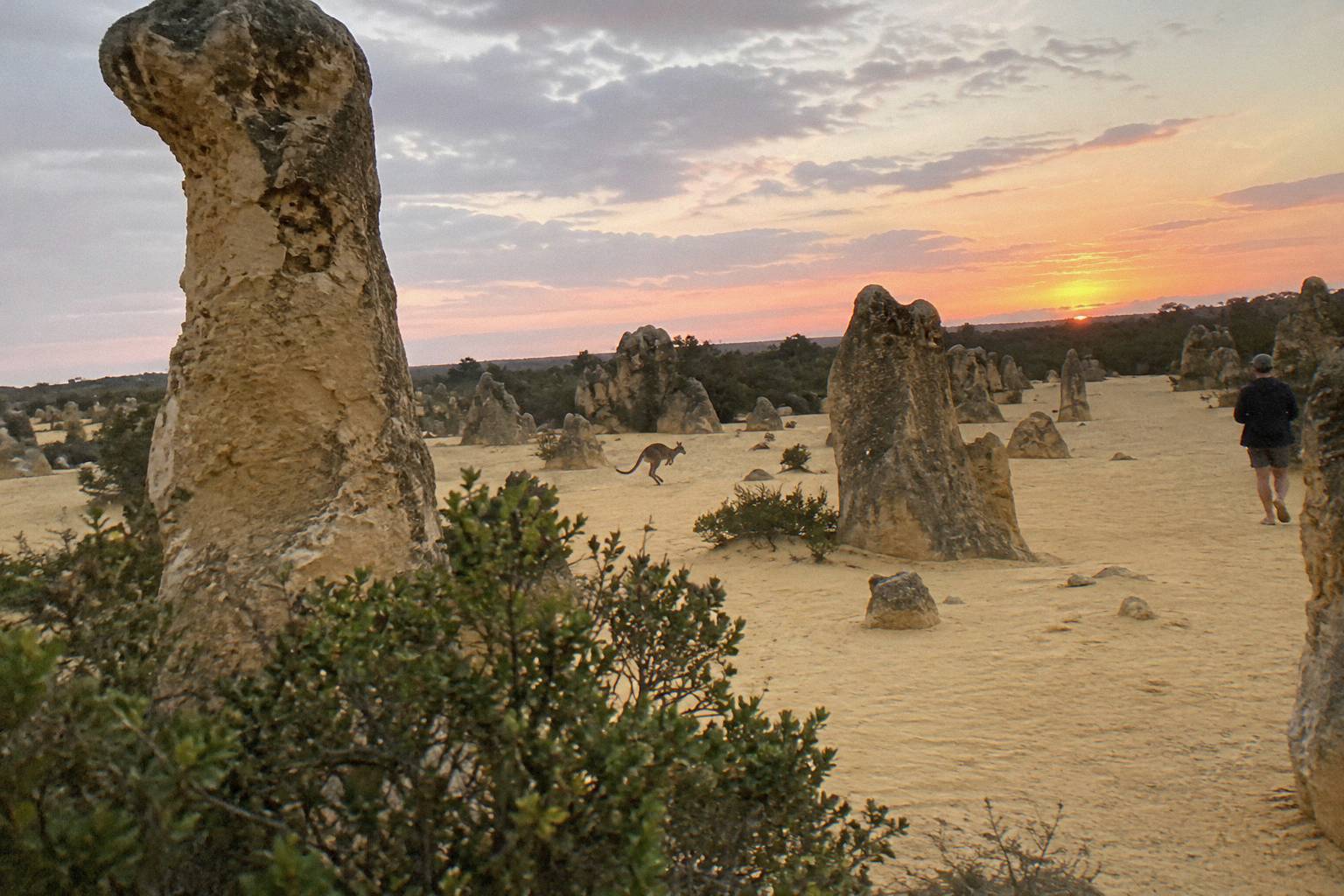
Autumn, from March to May, sees Pinnacles sunset times shift steadily earlier as the season moves toward the June minimum, while temperatures cool from a Jurien Bay mean maximum of 29.5 degrees C in March to 23.4 in May. Rainfall also increases across the season, from 15.1 mm in March to 73.3 mm in May, so late autumn brings a greater chance of cloud over the sunset view.
March behaves like a second summer: hot days near 30 degrees C, warm nights, and a sunset late enough that the tour day still finishes late. By April the mean maximum has dropped to 26.4 degrees C and the drive north is genuinely pleasant, which is one reason April is a comfortable month for travellers who want the long golden hour without February's heat. May is the pivot month, with rainfall jumping to 73.3 mm on the Jurien Bay record and the first genuinely cool nights at a 11.7 degree C mean minimum. A jacket for the stargazing portion stops being optional somewhere in May.
The stargazing half of these tours deserves a mention here. Cloud is the variable that decides what the night sky delivers, and the Bureau of Meteorology's Jurien Bay climate averages table shows why autumn's back half is a coin toss: April still averages under 30 mm of rain, May nearly 73.3 mm. No operator controls the sky, and the DBCA publishes no dark sky statement for the Pinnacles, so the realistic framing is that the site sits far from Perth's glow, with astronomy clubs rating the area very dark, and that clear nights are statistically likelier in the drier months. For more on the moon side of the equation, see the best months and moon phases for Pinnacles stargazing.
Product-wise, autumn suits the dinner-anchored departures. The "Pinnacles Sunset Stargazing Dinner Experience Small Group Tour" from Autopia Tours, 4.6 from 473 reviews, runs 9 hours from AU$199 per person with selected Perth inner-city pickup and drop-off points, park entry and a meal included, and a minimum age of 6. Cancellation is free up to 24 hours before start, which matters in a season where a May front can roll in, and the operator decides on the night what the sky allows.
| Month | Mean Max (C) | Mean Min (C) | Mean Rainfall (mm) | Sunset Character |
|---|---|---|---|---|
| March | 29.5 | 16.8 | 15.1 | Late, summer-like |
| April | 26.4 | 14.2 | 29.1 | Easing earlier, mild days |
| May | 23.4 | 11.7 | 73.3 | Clearly earlier, cool nights return |
Winter Sunsets At The Pinnacles: June To August
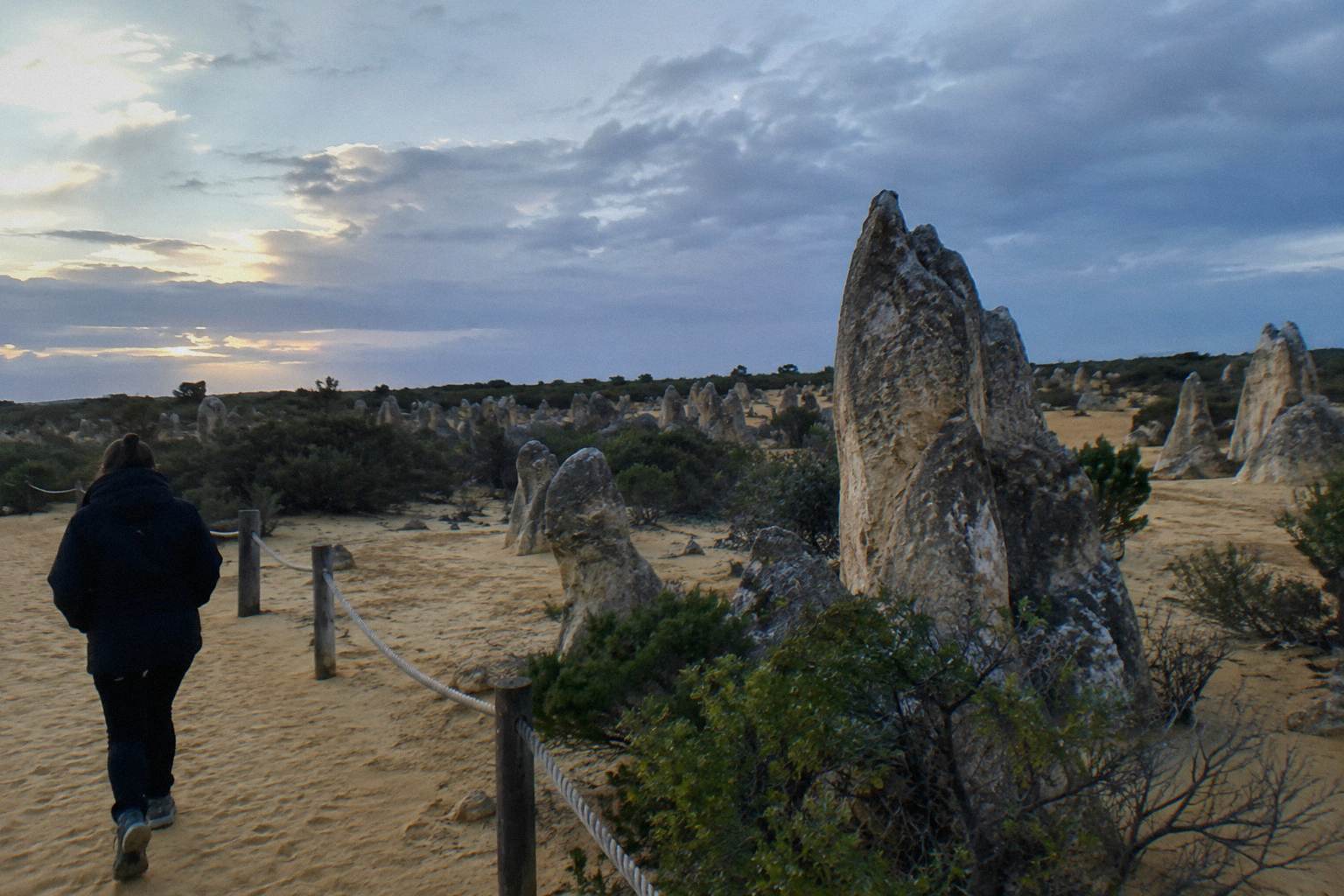
Yes, winter brings the Pinnacles their earliest sunsets, and tours leave Perth earlier to fit the full 9 hour itinerary into a shorter day. It is also the wettest stretch of the year, with Jurien Bay averaging 106.6 mm of rain in June and 111.1 mm in July, so expect genuinely cold nights near 10 degrees C for stargazing.
The winter trade is straightforward. You get the earliest sunset and therefore the earliest return to Perth, often the deciding factor for families and for anyone who does not want a midnight finish. The "Pinnacle Desert Sunset and Night-time Stargazing Tour from Perth" from Australian Pinnacle Tours, 4.4 from 131 reviews, runs 9 hours from AU$249 per person with hotel pickup and drop-off, a minimum age of 4 and a meal included, a shape that suits children better in June than in January. Free cancellation applies up to 24 hours before start across the sunset products.
Against that, June and July carry the year's highest rainfall averages, and a winter front can cover the sky. What a cloudy night means in practice varies by operator, and the cloud cover question deserves its own reading before you book a winter date. The cooler months also happen to be the ones astronomy sources describe as the clearest between fronts, so a winter booking is a bet on picking a night between systems rather than on the season as a whole. Check dates close to your window and keep the 24 hour cancellation rule in mind.
Winter also changes what you wear. A 9.5 degree C mean minimum in July means the post-dinner stargazing stop happens in single-digit cold on many nights, and the pillars area is exposed sand with no shelter. The packing advice in what to wear and bring for a Pinnacles sunset covers it in detail, but the short version is layers, a real jacket, and closed shoes for the sandy Desert View Walk Trail, which runs 1.5 km with a 300 m accessible path and a 1.2 km sandy section among the pillars per the DBCA discovery page.
| Month | Mean Max (C) | Mean Min (C) | Mean Rainfall (mm) | Sunset Character |
|---|---|---|---|---|
| June | 20.6 | 10.3 | 106.6 | Year's earliest, around this month |
| July | 19.6 | 9.5 | 111.1 | Earliest, wettest month of the year |
| August | 20.1 | 9.5 | 82.2 | Still early, slowly lengthening |
Spring Sunsets At The Pinnacles: September To November
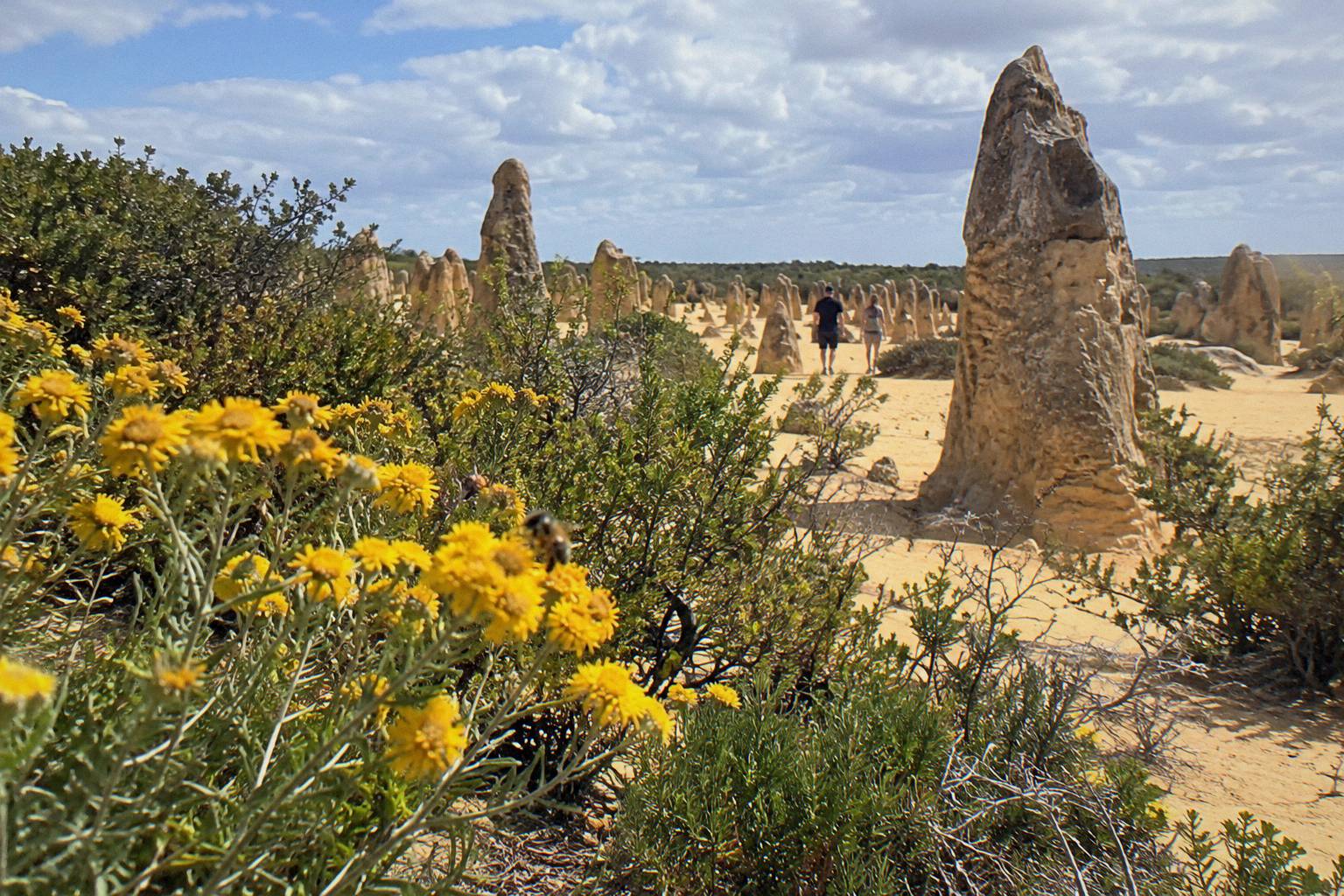
Spring slides sunset later month by month from the June minimum toward summer, with departure times on the booking calendar moving accordingly. Temperatures climb from a 21.4 degree C mean maximum in September to 26.0 in November, while rainfall falls away sharply, 41.8 mm in September, 26.4 in October and 16.9 in November. Spring is also the wildflower window, with DBCA describing vegetation that bursts into flower from August to October.
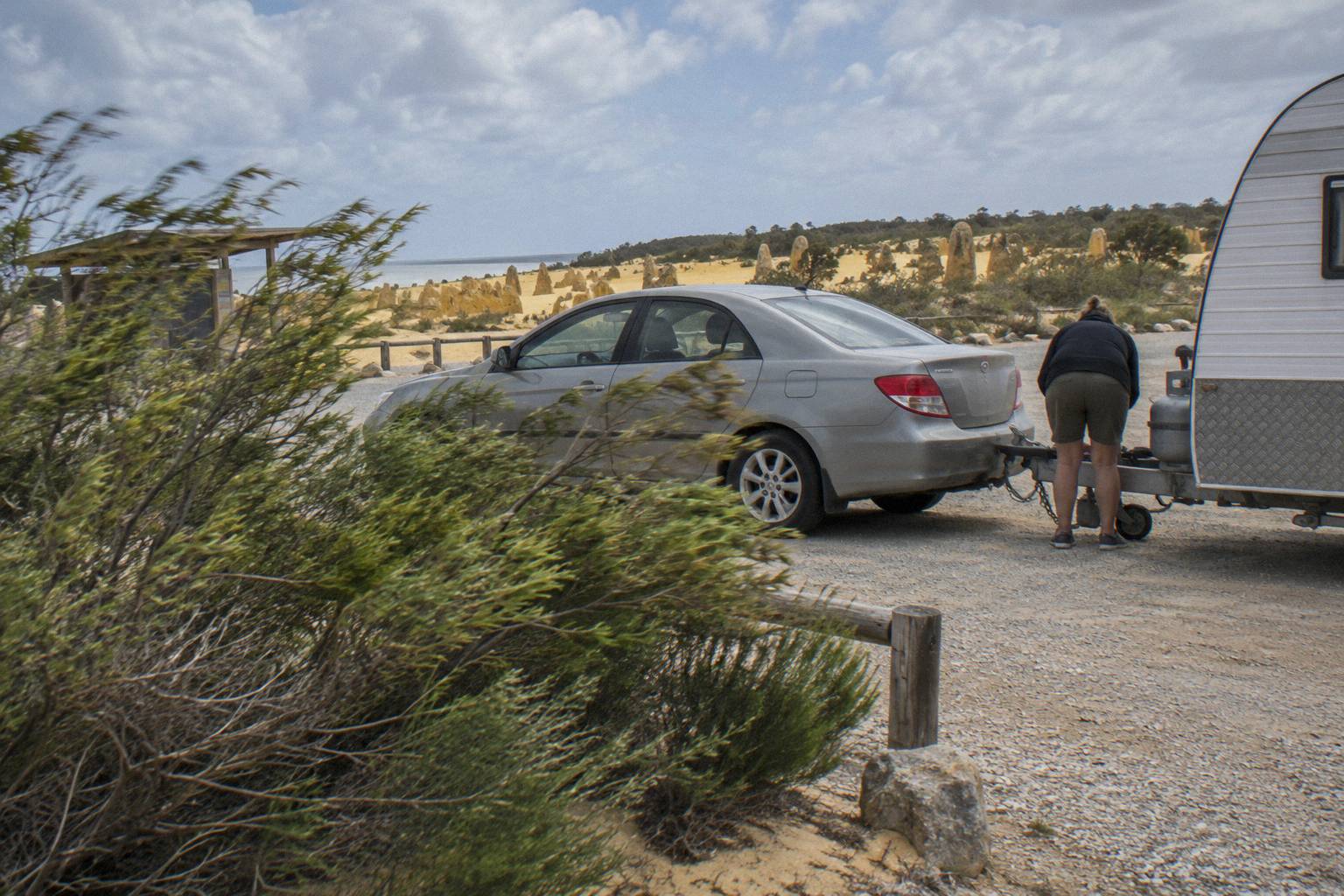
If there is a sweet spot for combining a sunset tour with something extra, spring is it. The DBCA park page describes the vegetation bursting into flower from August to October, and Australia's Coral Coast wildflowers guide extends the season from July to October, peaking August to September, with amounts varying on rainfall. A spring sunset departure therefore crosses a coast that may be in bloom during the drive north, and the rainfall averages are low enough that clear nights are statistically friendlier than in July. How much flower you encounter depends on the year's rain, so treat it as a possible bonus rather than a promise.
The daylight arithmetic sits kindly in spring too. Sunset is later than winter but earlier than summer, so the 9 to 9 hour 30 minute itineraries start mid-afternoon and finish at a civilised hour. September's 41.8 mm mean rainfall is the last of the wet before the dry ramp into December's 6.0 mm, and by November the mean minimum of 13.8 degrees C makes the stargazing stop comfortable in a light jacket. Photographers chasing sidelight on the pillars tend to like these months, and photographing the Pinnacles light and timing goes deeper on that angle.
Spring is also when the family question gets easiest. Minimum ages across the sunset products run 2 to 6, and a September or October date gives children the sunset experience without winter's cold or summer's midnight return, a balance explored in whether kids can do a sunset and stargazing tour. Whatever the month, departure times are chosen on the booking calendar, so the operator has already done the seasonal arithmetic when you see a date.
| Month | Mean Max (C) | Mean Min (C) | Mean Rainfall (mm) | Sunset Character |
|---|---|---|---|---|
| September | 21.4 | 10.0 | 41.8 | Early to mid, lengthening |
| October | 23.4 | 11.4 | 26.4 | Mid, mild |
| November | 26.0 | 13.8 | 16.9 | Notably later, warming |
How Sunset Tour Durations And Departures Actually Work
Every sunset product from Perth runs 9 hours to 9 hours 30 minutes door to door, and none prints a fixed departure clock time, because the start is matched to the season's light on the booking calendar. The bracket covers shared and small-group departures alike, all built around Perth pickup, the roughly two hour drive, pillar time as the light lowers, a meal and stargazing. Pickups cluster at CBD hotels or inner-city points depending on the operator.
The duration bracket matters for what it rules out rather than what it includes. A 9 hour itinerary is not a quick evening trip to the desert, it is a half day plus a night, and the difference between the 9 hour and 9 hour 30 minute products is rarely the pillar time, it is the extras: sandboarding stops, dinner service, and how long the stargazing segment runs. The Lumineer dinner departure at 9 hours 30 minutes names sandboarding, a meal and stargazing in its inclusions, while Wildlife Tours Australia's 9 hour adventure covers park entry, a meal and stargazing from AU$174 per person, the lowest from-price among sunset products. Amounts are Australian dollars and vary by date, so check the live price for the month you want.
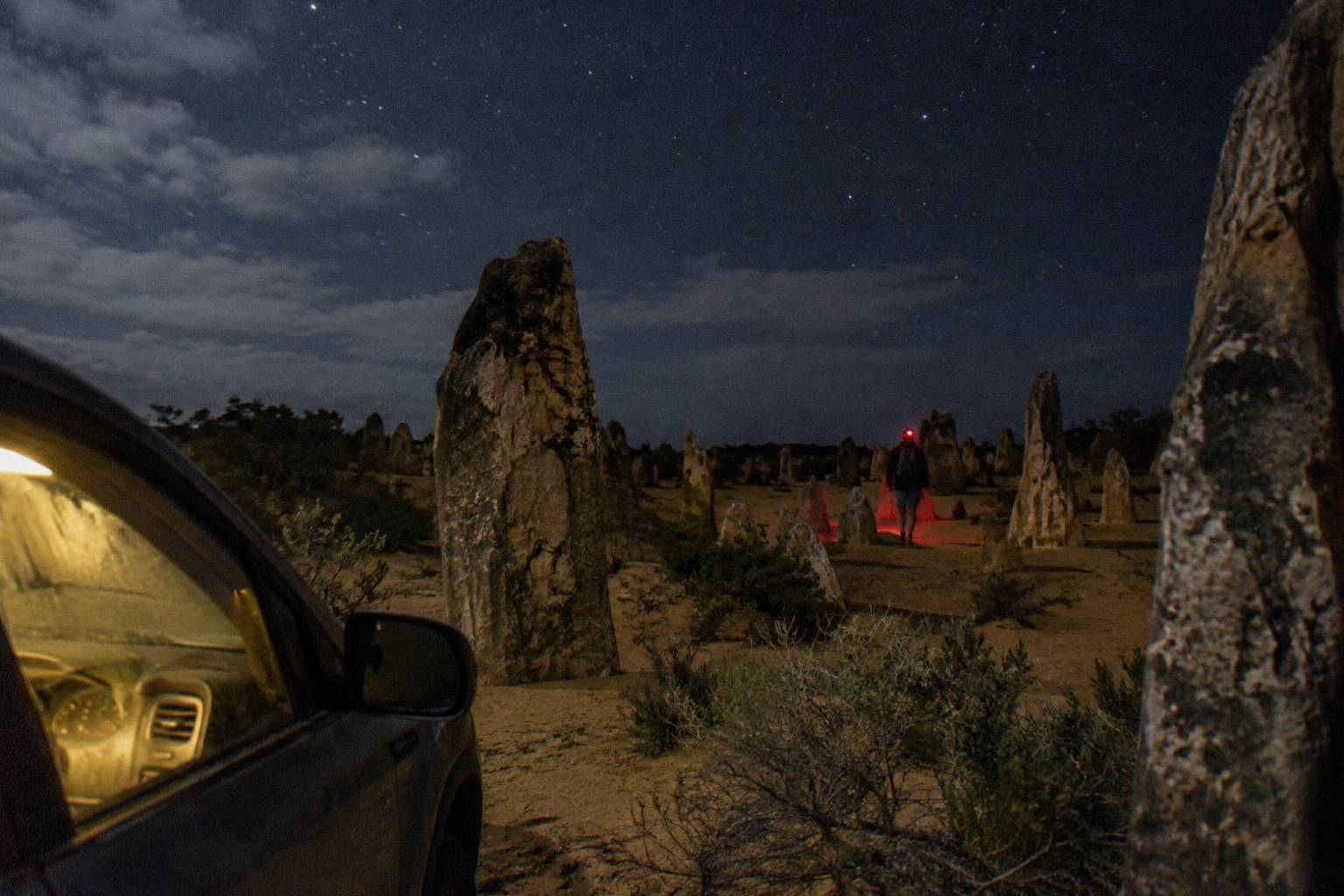
Pickup scope is the other practical variable. Lumineer picks up at designated Perth CBD hotels with return; Autopia's small-group experience and the Wildlife Tours Australia departure use selected inner-city pickup and drop-off points; Australian Pinnacle Tours offers hotel pickup and drop-off. None of them collect from outer suburbs or Fremantle on the sunset runs, so if you are staying outside the pickup zone the answer is to get yourself to a designated point or to consider a private option, which the private Pinnacles day trip guide covers separately. The DBCA Nambung National Park page is the reference for the park itself, entry fees and rules.
Booking behaviour follows the calendar. Because departure times are chosen at booking, the operator has already aligned the day with the sunset for that date, and the advance booking question is really a question about peak dates. Summer school holidays and wildflower-season weekends fill sunset departures first, since these products carry fixed passenger numbers, especially the small-group versions. Free cancellation up to 24 hours before start across the sunset lineup means an early booking is a low-risk way to secure a date, with the calendar showing the departure time for that month.
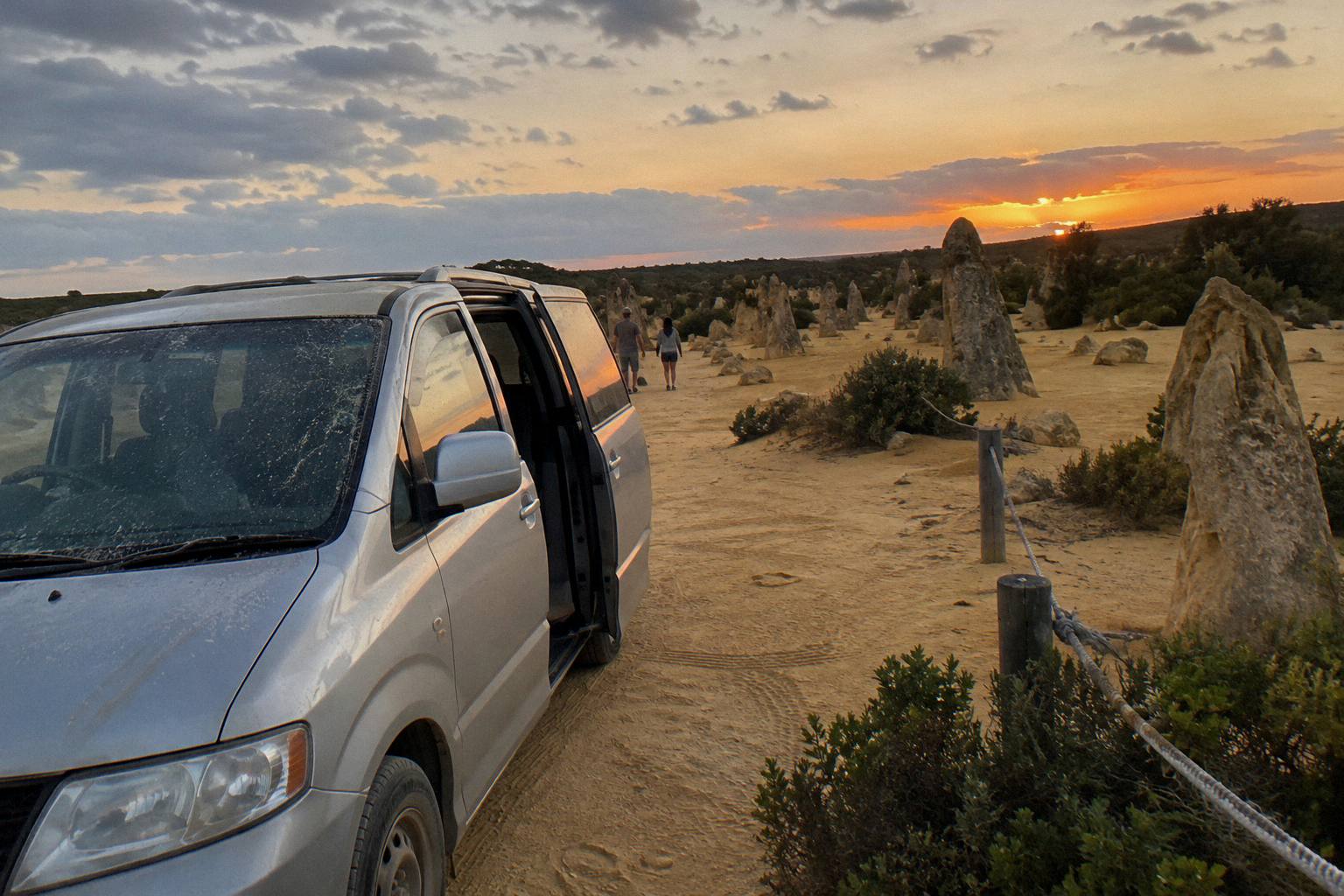
What Trips People Up Before You Book
The three recurring errors are assuming a fixed departure time, misreading how long the day runs, and forgetting that June to August nights are cold while December to February afternoons are hot. No sunset tour prints a clock time in advance, every one runs 9 hours or more door to door, and the seasonal spread at Jurien Bay runs from a 9.5 degree C mean minimum in July to a 30.8 degree C mean maximum in February.
The first error is hunting for a printed departure time before booking. Operators do not publish one, because the time is chosen on the booking calendar for the date you select, matched to when the sun sets that month. Asking the operator for a clock time before you have a date in mind will not produce one; selecting the date will. The same logic applies to dinner timing, pickup order and the stargazing stop, all of which shift with the season's light rather than sitting at fixed hours.
The second is underestimating the day. A 9 hour 30 minute itinerary that leaves Perth mid-afternoon in winter returns late evening; the same tour in early January, with the year's latest sunset, can return well after many people's bedtime. Travellers connecting an early flight, or bringing children under about 8, should model the return time against the month before booking, not after. The day trip length question for children works through the arithmetic.
The third is packing for the wrong season. Winter stargazing happens in air around 10 degrees C or colder on exposed sand, and summer drives happen in 30 degree C heat with a hot walking segment among the pillars. Neither is a reason to avoid the season, both are reasons to check the month's numbers in the tables above and pack accordingly. Rainfall is the final blind spot: June and July average 106.6 mm and 111.1 mm respectively at Jurien Bay, so a winter stargazing booking carries a real cloud risk, and the 24 hour free cancellation window on every sunset product is the practical hedge.
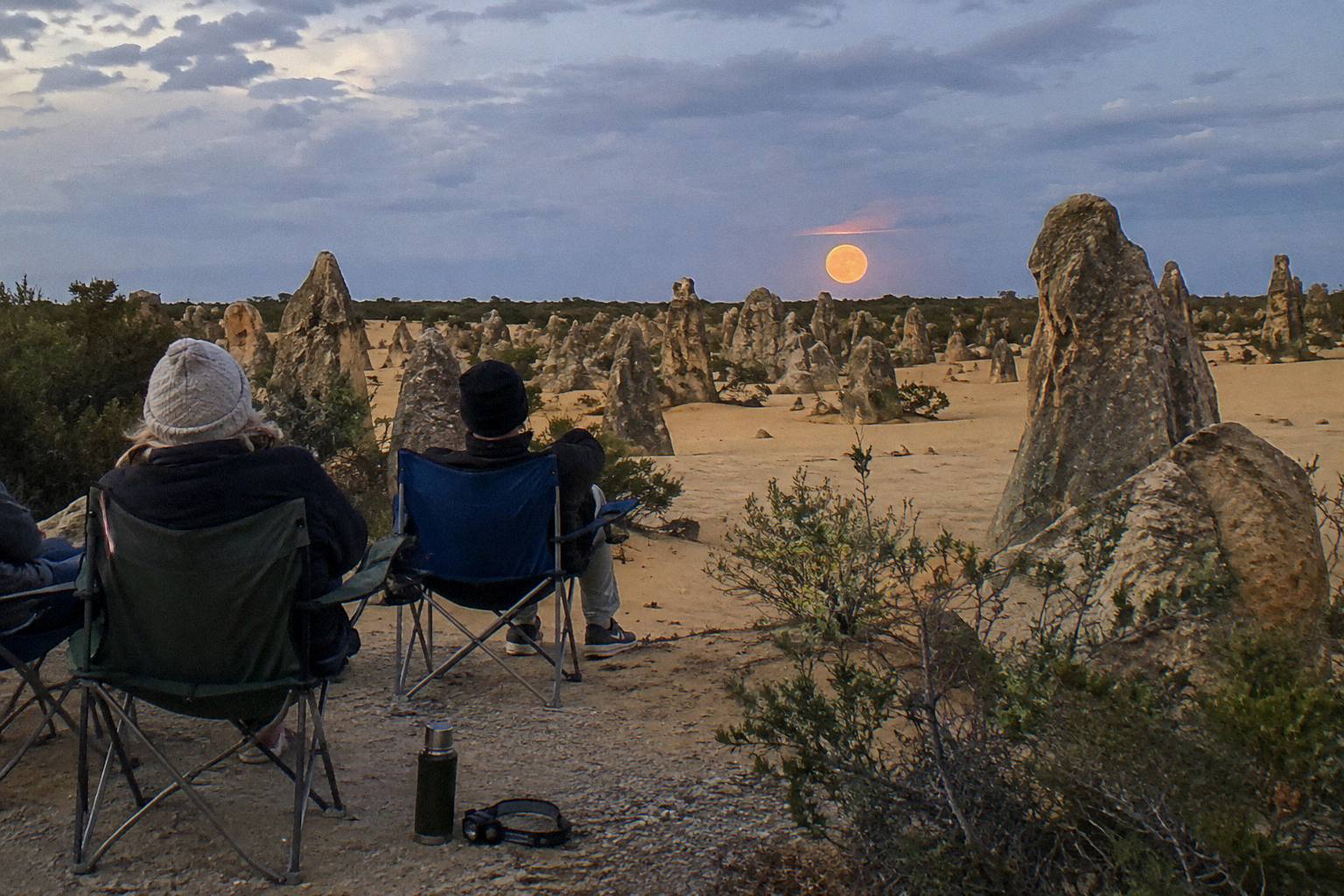
Three sunset products cover most needs: the Autopia small-group dinner experience at 9 hours from AU$199 per person, the Lumineer dinner and stargazing departure at 9 hours 30 minutes from AU$220 per person, and the Wildlife Tours Australia adventure at 9 hours from AU$174 per person. See dates on the booking calendar for the departure time in your month.
Common Questions About Sunset Timing At The Pinnacles
When Is Sunset Earliest At The Pinnacles?
Around June, which is also when sunset tours leave Perth earliest and return earliest. June and July are the wettest months at Jurien Bay on the Bureau of Meteorology record, 106.6 mm and 111.1 mm respectively, so an early finish comes with a higher cloud chance.
When Is Sunset Latest At The Pinnacles?
Around early January. Summer departures leave Perth later, run through the hottest afternoons of the year, and return late at night, since every sunset itinerary runs 9 hours to 9 hours 30 minutes door to door.
What Time Do Sunset Tours Leave Perth?
Departure times are chosen on the booking calendar and matched to the month's light, so no fixed clock time is published in advance. Selecting a date on the calendar shows the departure time the operator has set for that date.
How Long Do Sunset Tours To The Pinnacles Run?
The sunset products among these tours run 9 hours to 9 hours 30 minutes, from Perth pickup to return. The bracket covers shared departures and small-group versions, with the difference usually sitting in extras such as sandboarding stops and dinner service.
Which Month Has The Best Weather For A Sunset Tour?
On the Jurien Bay record, spring balances low rainfall with mild temperatures, 26.4 mm mean rainfall in October and a 23.4 degree C mean maximum. Wildflowers run August to October per DBCA. Summer is driest but hottest; winter is coolest but wettest.
Do Sunset Tour Times Change With The Seasons?
Yes, the departure time set on the booking calendar moves with the sunset across the year, earliest around June and latest around early January. The itinerary structure stays the same; the clock it runs on does not.